Air Fryer Tips and Tricks for Perfect Results Every Time
Master your air fryer with these game-changing tips for perfect results every time

The air fryer has earned its place as one of the most popular kitchen appliances in recent years — and for good reason. It delivers crispy, golden results in a fraction of the time of a conventional oven, uses far less oil than traditional frying, and requires minimal supervision. But like any tool, the air fryer rewards those who understand how it works. These tips will help you get consistently excellent results from the start.
Key Takeaways
- Crispness comes from dry surfaces, not oil. Pat food dry and use a light spray rather than a drizzle.
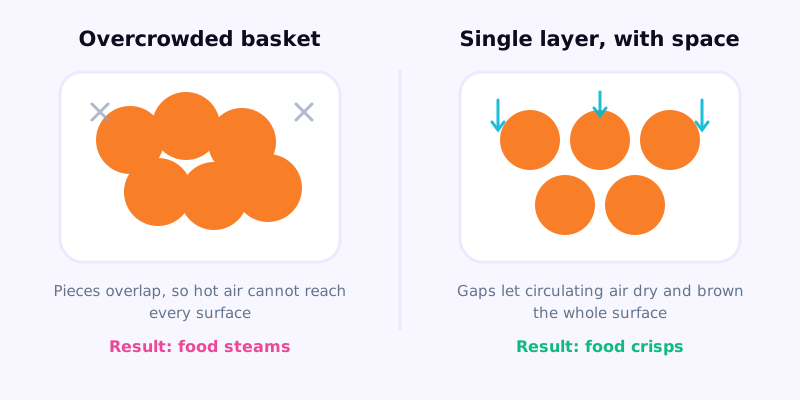
- Space matters more than settings. An overcrowded basket steams food; cook in batches instead.
- Treat every time and temperature as a starting point. Wattage and basket size vary, so check early and use a thermometer for meat and fish.
- Clean after each use. Built-up grease is the usual cause of smoking and off flavours.
How the Air Fryer Actually Works
- Rapid hot air circulation: A powerful fan blasts hot air at high speed, creating a convection effect
- Dehydration is the key: The fast-moving air dries the surface quickly, creating crispness without submersion in oil
- Small cavity advantage: The compact size heats faster and more evenly than a full-size oven
- Oil still helps: A light coat of oil improves browning and prevents sticking — just much less than frying
What the Air Fryer Does Best
- Frozen foods: Chips, nuggets, fish sticks — better results than the oven in half the time
- Vegetables: Brussels sprouts, broccoli, and cauliflower get beautifully caramelised edges
- Chicken pieces: Thighs, wings, and drumsticks become crispy-skinned and juicy inside
- Reheating leftovers: Pizza, fried chicken, and spring rolls stay crispy (unlike the microwave)
- Roasted chickpeas and nuts: Quick, even roasting for snacks and salad toppings
- Toasted sandwiches and wraps: Crispy exterior without a pan — great for quesadillas
Essential Air Fryer Tips
- Don't overcrowd the basket: Food steams rather than crisps when piled up — cook in batches if needed
- Preheat for 2–3 minutes: A hot air fryer crisps the surface immediately instead of steaming at first
- Pat food dry: Moisture is the enemy of crispness — dry proteins and vegetables before seasoning
- Shake or flip halfway: Turn food at the midpoint to ensure even browning on all sides
- Use a light oil spray: Even oil distribution creates better browning than drizzling
- Use parchment liners: Perforated parchment prevents sticking and makes cleanup instant
Temperatures and Times to Know
Use these as starting points rather than fixed rules. Air-fryer basket size, wattage, food quantity, and whether food is fresh or frozen all change the result. Check food early, follow the package or appliance guidance where available, and use a food thermometer for meat and fish.
| Food | Temperature | Start checking | Technique |
|---|---|---|---|
| Vegetables | 400°F / 200°C | 10 minutes | Shake once at the midpoint |
| Chicken wings | 400°F / 200°C | 20 minutes | Turn once; verify cooked through |
| Frozen chips / fries | 380°F / 195°C | 15 minutes | Shake twice |
| Fish fillets | 375°F / 190°C | 10 minutes | Thickness affects cooking time |
| Whole chicken breast | 375°F / 190°C | 18 minutes | Verify the centre reaches a safe temperature |
Common Air Fryer Mistakes to Avoid
- Skipping the preheat: Starting cold can change the cooking time and browning, so check the food earlier than the recipe suggests
- Using too much oil: Excess oil drips, smokes, and can trigger the smoke alarm
- Not checking food early: Air fryers cook fast — check 3–5 minutes before the timer ends
- Ignoring the size difference: Small air fryers need smaller batches for the same crispness
- Forgetting to clean the basket: Built-up grease causes smoke and affects flavour — clean after each use
Foods That Don't Work Well in the Air Fryer
The air fryer is genuinely versatile, but understanding its limitations saves you from disappointing results and messy clean-ups. Certain foods actually perform worse in an air fryer than in a conventional oven or on the hob — not because the technique is wrong, but because the food's properties work against how the air fryer creates its results.
- Wet batters: Traditional beer batter or tempura batter drips through the basket and creates smoke — use breadcrumbs instead for a similar crispy coating
- Leafy greens: Spinach and kale blow around in the air current and burn unevenly before cooking through — they work better in a pan
- Large roasts: A full joint of meat needs the slower, moister environment of an oven to cook evenly without drying out on the outside
- Cheese alone: Melted cheese without a coating slides through the basket and makes a mess — always wrap in a breadcrumb coating
- Very light foods: Rice and pasta will be blown around by the fan and cook unevenly — prepare these on the hob as normal
- Heavily sauced food: Thick sauces burn at high air fryer temperatures — add sauces after cooking or use the air fryer to reheat rather than cook from scratch
Cleaning and Maintenance: Keeping Your Air Fryer in Top Shape
A clean air fryer cooks better, lasts longer, and doesn't fill your kitchen with smoke from burnt grease. Cleaning takes under five minutes after each use — a small investment that dramatically extends the life of the appliance and keeps results consistent. Most air fryer components are far easier to clean than people expect.
- Clean after every single use: Grease hardens when left — removing it fresh takes seconds; scrubbing hardened grease takes minutes and risks damage
- Basket and tray in soapy water: Most baskets are dishwasher safe, but a soak in warm soapy water for 10 minutes softens any residue for easy wiping
- Wipe the heating element: Turn the unit upside down and gently wipe the element with a damp cloth once a week — built-up grease there causes smoking
- Never use abrasive scourers: Harsh pads damage the non-stick coating — use a soft sponge or a non-scratch scrubber only
- Parchment liners reduce cleaning time: Perforated air fryer parchment liners mean the basket stays clean — the liner catches everything and goes straight in the bin
- Deep clean monthly: Remove all components, wipe the interior cavity with a damp cloth, and check the vent holes at the back aren't blocked with grease
The air fryer works best when you work with its strengths: small batches, dry surfaces, and adequate space for air to circulate. Master these fundamentals and you'll be getting crispy, perfectly cooked results in no time. Experiment with your favourite foods, take note of what works at which temperatures, and within a few weeks the air fryer will feel as intuitive as any pan on the stove.
Frequently Asked Questions
Do you need to preheat an air fryer?
Often, but it depends on the recipe and appliance. Preheating for a few minutes can improve browning and make timings more predictable, especially for thin foods such as fries. Other models and recipes allow food to go into a cold basket. Follow the appliance instructions and reduce or increase the cooking time based on what you observe.
How do you prevent food from sticking in an air fryer?
Lightly coat food with oil before placing it in the basket — a spray bottle or brush works better than pouring. Parchment paper liners cut to fit the basket prevent delicate items like fish from sticking. Avoid overcrowding, which traps steam and causes sticking. Give the basket a light spray of cooking oil before use if you're cooking something particularly sticky. Don't use aerosol sprays like PAM directly on the basket coating as they can damage the non-stick surface over time.
Which foods cook best in an air fryer?
Air fryers excel at anything you want crispy: frozen chips and nuggets, chicken wings, spring rolls, roasted vegetables, and reheated pizza. Chicken thighs and drumsticks come out beautifully — crispy skin, juicy inside. Salmon fillets, prawns, and fish fillets cook quickly and stay moist. Foods that do not work well include wet batters (they drip and don't set), large roasts that need slow even heat, and anything very delicate that needs a liquid cooking environment.
Is an air fryer more energy efficient than an oven?
Yes, significantly. A typical air fryer uses 1,000–1,700 watts and heats up in minutes, while a conventional oven uses 2,000–5,000 watts and takes 10–15 minutes to preheat. For small quantities, the air fryer uses a fraction of the energy. It's also faster for most items — 20 minutes in an air fryer often replaces 35–40 minutes in an oven. For cooking a large batch or a full roast, the oven becomes more practical, but for daily cooking the air fryer is considerably cheaper to run.
How do you clean an air fryer properly?
After each use, let it cool completely then remove the basket and drawer. Wash both with warm soapy water or place in the dishwasher if the manufacturer says they're dishwasher-safe. For stuck-on food, soak for 10 minutes before scrubbing with a soft brush — never use metal scourers that damage the coating. Wipe the inside of the unit with a damp cloth. For grease that builds up on the heating element, turn the fryer upside down when cool and clean the element gently with a soft brush. Clean after every 3–5 uses at minimum.