Budget Travel Tips: See More of the World for Less
Practical strategies to travel more and spend less without sacrificing the experience

Budget travel is one of the most liberating skills you can develop. Once you understand how fares work, how accommodation can be free or nearly free, and how to eat well without tourist-trap prices, the world becomes far more accessible than most people realise. Budget travel isn't about deprivation — it's about spending money on the experiences that matter most and being clever about everything else.
Key Takeaways
- Flexibility saves more than timing tricks. Adjustable dates and nearby airports beat any fixed booking rule.
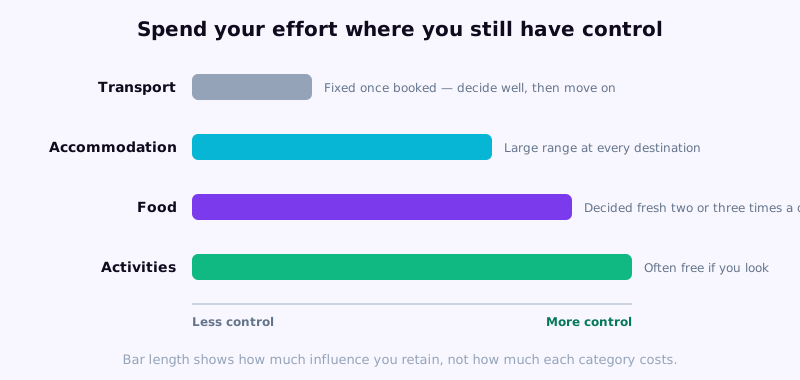
- Accommodation and food are the controllable costs. Small daily choices compound across a trip.
- Free activities often define the trip. Walking, public spaces and local events cost little.
- Track spending while travelling. Budgets fail when costs are reviewed only afterwards.
Finding Cheap Flights
- Be flexible on dates: Flying Tuesday to Thursday is almost always cheaper than Friday to Sunday
- Use flight comparison tools: Search multiple tools across 2–3 days to compare the full picture
- Compare timing instead of following a fixed window: Start monitoring fares early, compare nearby dates, and book when the price fits your budget; demand, route, and season matter more than a universal rule
- Use a private window for privacy if you prefer: Do not expect it to reliably lower fares; price alerts and flexible dates are more useful ways to monitor changes
- Consider nearby airports: A short train ride to a secondary airport can save hundreds
- Set price alerts: Alerts on your searched route notify you when fares drop
Affordable Accommodation Strategies
- Hostels for solo travellers: A private room in a hostel often costs half the price of a hotel with similar quality
- Apartment rentals: For trips of 4+ nights, self-catering saves significantly on food costs too
- Loyalty programmes: Points from one or two hotel chains compound quickly and deliver free nights
- House-sitting and home exchange: Stay in someone's home for free in exchange for caring for their property
- Book directly with properties: Hotels often price-match and offer extras when you bypass booking platforms
- Location over luxury: A well-located simple room outperforms a luxurious hotel at the edge of the city
Eating Well on a Travel Budget
- Eat where locals eat: Away from tourist squares, the food is better and the prices are half
- Markets and street food: Often the most authentic and cheapest food a destination offers
- Self-catering some meals: A local supermarket breakfast before a long day costs a fraction of a café
- Lunch over dinner: Many restaurants offer the same dishes at lunch for significantly less
- Set menus and daily specials: Tourist areas aside, set menus offer value that's hard to beat
- Travel with a few snacks: Airport and train station food is priced for captive audiences
Free and Low-Cost Activities
- Museums on free days: Many major museums have one free day per week — research before you go
- Walking tours: Free walking tours operate in most major cities — tip the guide what you can afford
- Parks, markets, and neighbourhoods: Simply walking and observing a place is often the most memorable experience
- Free concerts and events: Local cultural calendars, festivals, and public events are often free or cheap
- Libraries and cultural centres: Often free admission and excellent insight into local life
- Beaches and nature: The most beautiful experiences often cost nothing at all
Travel Money and Budgeting Tips
- Use a travel card with no foreign transaction fees: Standard bank cards charge 2–3% on every purchase abroad
- Set a daily budget before you arrive: Knowing your ceiling makes spending decisions faster and less stressful
- Track as you spend: A simple notes app tally keeps you aware without being obsessive
- Withdraw in larger amounts: ATM fees are often flat — spreading across multiple withdrawals costs more
- Carry local cash for small vendors: Markets, street food, and tips often only work in cash
Using Credit Card Points and Travel Rewards
One of the most underused tools in budget travel is the credit card rewards system. Used responsibly — meaning you pay the balance in full each month — a travel rewards card can fund flights, hotel nights, and airport lounge access that would otherwise cost hundreds. The key is concentrating your spending strategically rather than scattering points across multiple programmes that never reach redemption thresholds.
- Choose one or two programmes and stick with them: Points spread across five different cards and airlines compound into nothing — concentrated spending on one card builds meaningful balances quickly.
- Pick a card aligned to how you travel: Frequent flyers benefit from airline co-branded cards; flexible travellers often get more value from transferable points programmes like Amex Membership Rewards.
- Use your card for everyday purchases: Groceries, utilities, and subscriptions paid on a rewards card accumulate points with no extra spending — just redirect what you already spend.
- Welcome bonuses are often the biggest single earn: Many cards offer bonus points worth one or two free flights if you meet a minimum spend within the first few months.
- Redeem points for flights before hotels: Flight redemptions typically offer the best value per point — hotel redemptions can be worthwhile but are often less efficient.
- Watch for transfer partner promotions: Many programmes run limited-time bonuses when transferring to airline partners — timing a transfer during a promotion can dramatically increase the value of your points.
Avoiding Tourist Traps That Cost Money
Every popular destination has a geography of pricing — tourist zones where restaurants, taxis, and shops charge multiples of what locals pay, and quieter areas just minutes away where the same quality comes at a fraction of the price. Recognising and navigating this geography is one of the most practical budget travel skills you can develop.
- Walk two streets back from any famous square or landmark: Restaurants directly facing tourist attractions charge a premium purely for location — the equivalent meal one street over is often half the price.
- Avoid menus without prices displayed: If pricing isn't listed outside a restaurant or shop, assume it will be higher than expected — walk on and find somewhere transparent.
- Learn the fair taxi rate before you need one: Check the local transport app or ask your accommodation what a journey to the centre should cost — then negotiate from that number, not from whatever a driver suggests.
- Be sceptical of "traditional" experiences near tourist sites: Overpriced cultural shows, costume photo opportunities, and "local craft" shops near major sights are often tourist revenue operations rather than genuine culture.
- Skip the airport and hotel exchange desks: Currency exchange at airports and hotel lobbies typically offers the worst rates — use a no-fee travel card or an in-city ATM instead.
- Research free versions of paid attractions: Many museums, galleries, and viewpoints have free access on specific days or times — a quick search before you visit can save meaningful money over a multi-day trip.
Frequently Asked Questions
How do you find cheap flights consistently?
Set up price alerts on Google Flights or Skyscanner for your target routes so you're notified when fares change rather than checking manually. Compare several dates, nearby airports, baggage rules, and transport costs before deciding. There is no booking window that is cheapest for every route, so treat timing suggestions as rough planning guidance and check the fare history or advice available for your route. A private browsing window can protect your privacy, but it should not be treated as a reliable way to reduce fares.
What are the free or nearly free accommodation options when traveling?
House-sitting platforms let you stay in someone's home for free in exchange for looking after their property or pets — stays of a week or more are common. Couchsurfing connects travellers with locals who offer a spare room or couch at no cost; it's also a great way to meet people. Work exchanges through platforms like Workaway offer free accommodation in exchange for a few hours of work per day. Camping is another low-cost option in many destinations. For budget paid options, hostel dorms remain the cheapest traditional accommodation — often 20–40% of hotel prices.
Which destinations in India are the cheapest to travel to?
Varanasi, Rishikesh, and Hampi are among India's most budget-friendly destinations — accommodation in guesthouses starts very low, and food at local dhabas is extremely affordable. Pushkar and Orchha offer strong value with rich culture and minimal tourist markup. In the northeast, Meghalaya and Assam are affordable with stunning scenery. Pondicherry offers a colonial atmosphere without the cost of Goa's peak season. In general, smaller towns and off-peak timing dramatically cut costs compared to major cities and popular destinations during holidays.
How do you eat well cheaply while traveling?
Eat where locals eat — dhabas, market stalls, and canteen-style restaurants a street or two away from tourist areas offer the same or better quality at a fraction of the price. Have your main meal at lunch, when many restaurants offer the same dishes for less. Visit local markets in the morning to buy fresh fruit, bread, and snacks for the day at grocery prices. Avoid any restaurant with photos on the menu right next to a landmark — the premium is purely for location. Staying somewhere with a kitchen and preparing even one meal a day cuts food costs significantly.
Is it worth getting a travel rewards credit card for budget travel?
Yes — if used responsibly, meaning you pay the balance in full every month. A good travel credit card with no foreign transaction fees saves 2–3% on every purchase abroad immediately. Travel rewards points earned on everyday spending (groceries, bills, subscriptions) accumulate into free flights and hotel nights over time. Welcome bonuses on new cards are often worth one or two return flights. The key is concentrating spending on one or two programmes rather than scattering points across many cards that never reach redemption thresholds. Never carry a balance — interest charges will eliminate any rewards value instantly.
The best travel experiences rarely come from the most expensive choices. The most memorable meals are often from market stalls; the most interesting accommodation is often the cheapest. Budget travel forces you to engage more deeply with your destination — to eat where locals eat, to take the bus, to talk to people. It's not a compromise; it's often a richer way to travel.