Quick Weeknight Dinner Ideas: Ready in 30 Minutes or Less
Quick, tasty dinner ideas for busy weeknights that the whole family will love

Getting a tasty, satisfying meal on the table after a long day doesn't have to be a stressful ordeal. With a little planning and a handful of go-to recipes, you can enjoy home-cooked weeknight dinners that the whole family will love — all in 30 minutes or less. The secret lies in smart ingredient choices, efficient cooking methods, and building a small repertoire of reliable dishes you can rotate through the week.
Key Takeaways
- Frameworks beat recipes on weeknights. A repeatable pattern removes the nightly decision of what to cook.
- Stocked staples decide your speed. Dinner is fast when the pantry already holds the base ingredients.
- Batch work on one day shortens every other day. Cooked grains and proteins become building blocks.
- Frozen vegetables are a practical shortcut. They skip washing and chopping without much compromise.
Why Weeknight Cooking Matters
- Home-cooked meals: Generally healthier than takeout — you control ingredients and portions
- Budget-friendly: Cooking at home saves significant money over restaurant meals
- Family bonding: Shared meals create meaningful connection time
- Skill building: Regular cooking improves confidence and technique
- Less food waste: Using what you have reduces spoilage and saves money
The 5 Weeknight Dinner Frameworks
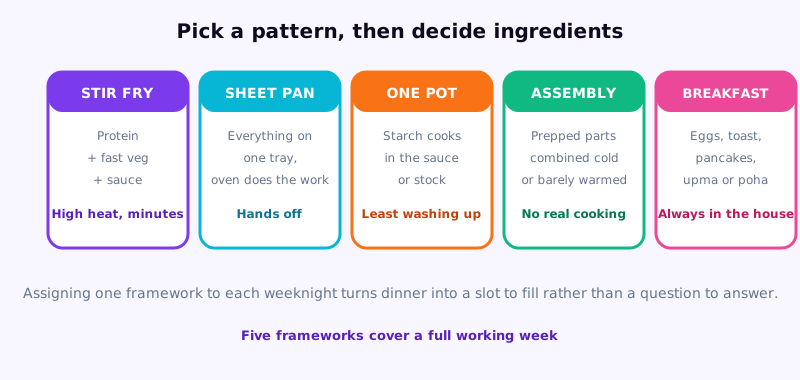
- Sheet pan meals: Toss protein and veggies with oil and seasoning, roast at 425°F for 20–25 min
- Stir-fry: High heat, quick cooking — dinner ready in under 15 minutes
- Pasta dishes: Cook pasta while sauce simmers — endlessly versatile
- Grain bowls: Pre-cook a batch of rice or quinoa, top with whatever is in the fridge
- Tacos and wraps: Any seasoned protein + toppings in a tortilla — always a crowd-pleaser
30-Minute Dinner Ideas
- Lemon garlic shrimp pasta: Shrimp cook in 5 minutes, toss with pasta, garlic, butter, and lemon
- Chicken quesadillas: Rotisserie chicken + cheese + salsa in a tortilla, pan-fried until golden
- Veggie fried rice: Day-old rice, eggs, soy sauce, and frozen veggies — done in 12 minutes
- Black bean tacos: Spiced canned beans, avocado, shredded cabbage, and lime crema
- Tomato basil pasta: Crushed tomatoes, garlic, and fresh basil over any pasta shape
- Sheet pan sausage and veg: Slice and roast — minimal prep, maximum flavour
Pantry Staples That Speed Things Up
- Canned tomatoes and beans: Bases for sauces, soups, and stews in minutes
- Pasta and rice: Blank canvases for almost any flavour profile
- Soy sauce and oyster sauce: Instant umami for stir-fries and marinades
- Jarred garlic and ginger: Skip the chopping on busy nights
- Frozen vegetables: Just as nutritious, no prep required
- Rotisserie chicken: Game-changer for fast protein on hectic evenings
Tips for Getting Dinner on the Table Faster
- Read the recipe first: Know what's happening before you start — no mid-cook surprises
- Prep while water boils: Use idle moments to chop, measure, and season
- Use one pan where possible: Fewer dishes, more time to relax after dinner
- Cook once, eat twice: Double the protein or grain, repurpose it the next night
- Keep a weekly dinner plan: Even a rough plan cuts decision fatigue significantly
Sunday Batch Cooking: Your Weeknight Shortcut
Spending 45–60 minutes on a Sunday doing simple batch cooking can completely transform your weeknight experience. You're not cooking full meals in advance — you're preparing building blocks that dramatically cut cooking time on busy evenings. With a few proteins and grains already cooked and waiting in the fridge, assembling dinner on Tuesday night becomes a 10-minute assembly job rather than a 40-minute production.
- Cook a large batch of grains: A pot of rice, quinoa, or barley takes 20 minutes unattended and lasts 4–5 days in the fridge, ready to serve as a base for any meal.
- Roast a tray of vegetables: Broccoli, sweet potato, capsicum, and zucchini roasted with olive oil and seasoning keep well and can be added to salads, wraps, or grain bowls all week.
- Prep a protein in bulk: Baked chicken thighs, a batch of cooked lentils, or hard-boiled eggs give you instant protein options across multiple meals without repeated cooking.
- Pre-chop aromatics: Dice a few onions and mince a jar's worth of garlic — stored in airtight containers, they cut prep time on every dish you make during the week.
- Batch cook one complete meal: A large pot of soup, dal, or chilli improves overnight and covers two or three dinners effortlessly.
Using Frozen Vegetables Smartly
Frozen vegetables deserve a far better reputation than they have. Commercially frozen vegetables are typically blanched and frozen within hours of harvest, which locks in nutrients at their peak — often making them more nutritious than fresh produce that has sat in transport and on shelves for days. For weeknight cooking, they are a genuine game-changer: no washing, no chopping, no spoilage, and they go from freezer to pan in under a minute.
- Cook from frozen directly: Most frozen vegetables go straight into a hot pan or boiling water — no thawing required, which saves several minutes per dish.
- Best for stir-fries and fried rice: Frozen peas, edamame, sweetcorn, and mixed vegetables integrate seamlessly into high-heat dishes without going mushy.
- Frozen spinach for sauces and soups: Squeeze out excess water after thawing and it performs identically to wilted fresh spinach in curries, pasta sauces, and soups.
- Stock a mix of options: Peas, corn, edamame, broad beans, broccoli florets, and mixed stir-fry blends give you variety without multiple shopping trips.
- Don't overcook: Frozen vegetables need less cooking time than raw fresh ones — add them towards the end of cooking to preserve their colour, texture, and nutrition.
Weeknight cooking doesn't need to be elaborate to be good. A small collection of flexible, fast recipes — combined with a well-stocked pantry and a little planning — transforms dinner from a nightly stressor into something you might actually look forward to. Start with two or three of these frameworks, build confidence, and your weeknight routine will take shape naturally.
Frequently Asked Questions
How do you make quick dinners without meal prepping?
Stock a reliable pantry. With tinned tomatoes, pasta, lentils, coconut milk, canned beans, and a few spices always on hand, you can make a satisfying dinner in 20–25 minutes without any advance prep. Learn 5–6 base recipes that are flexible — a stir-fry, a pasta sauce, a curry, a grain bowl — and rotate proteins and vegetables based on what's available. The goal is having options, not a rigid plan.
What should you cook when you have almost no time?
Eggs are the fastest real meal: a two-egg omelette with whatever vegetables are in the fridge takes under 5 minutes. Quesadillas, loaded toast (avocado, beans, or eggs), and grain bowls assembled from fridge leftovers all take under 10 minutes. Pasta with olive oil, garlic, and parmesan is ready in 12 minutes from scratch. Keep a bag of frozen vegetables and pre-cooked grains in the freezer for genuine emergencies — they reheat in minutes.
What are easy pantry dinners using basic ingredients?
Pasta aglio e olio (pasta, olive oil, garlic, chilli flakes) takes 15 minutes and uses only pantry staples. Lentil soup from canned or dried lentils with canned tomatoes and spices takes 25 minutes. Bean tacos with tinned beans, spices, and corn tortillas are ready in 10. Fried rice using day-old cooked rice, eggs, soy sauce, and frozen peas is a 12-minute meal. These recipes are reliable, budget-friendly, and require no fresh ingredients beyond what you likely already have.
How do you make weeknight cooking less stressful?
Decide what you're having before you get home — even a loose plan eliminates the most stressful moment. Keep a short list of go-to meals you can make confidently without a recipe. Do one small prep task at the weekend (chop onions, cook a batch of grains, marinate protein) that speeds up weeknight assembly. Accept that some nights are simpler than others — a good omelette and salad is a complete, respectable dinner. Stress comes from expectation; simplify the standard.
What are good dinner ideas for one or two people?
Cooking for one or two is actually easier than for families because portions are smaller and waste is minimal. Sheet pan dinners — a protein and vegetables roasted together on one tray — scale perfectly to one or two servings. Stir-fries, grain bowls, and pasta dishes all adjust naturally. Soups and curries batch well for two dinners in a row. The main challenge is avoiding food waste — buy smaller quantities, use frozen vegetables instead of fresh where possible, and embrace leftovers as lunch the next day.