20 Energy-Saving Tips to Reduce Your Electricity Bill
Simple changes that cut your energy bills and reduce your carbon footprint

Energy efficiency can reduce waste, improve comfort, and lower utility costs. The result depends on your climate, home, equipment, habits, and local energy prices, so treat any savings estimate as a starting point rather than a promise. Begin by checking your bills and identifying the changes most relevant to your home.
Key Takeaways
- Measure before you spend. Knowing where energy goes prevents investing in the wrong upgrade.
- Free and low-cost changes come first. Sealing draughts and adjusting settings cost little and act quickly.
- Large investments need a payback view. Compare expected savings against upfront cost and how long you will stay.
- Seasons change the priority. Heating and cooling strategies address different losses.
Understanding Your Home's Energy Use
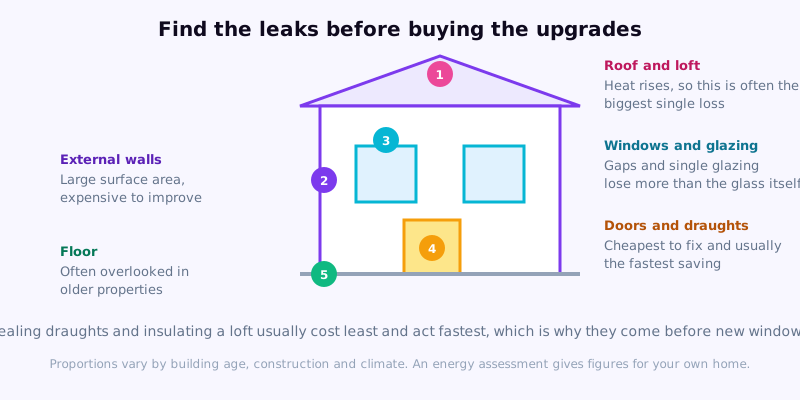
Energy use varies widely by climate, building type, appliances, and household habits. Heating and cooling, water heating, lighting, and appliances are common areas to investigate, but your own utility bill is more useful than a generic percentage.
- Heating and cooling: Often a major source of use in homes that rely on powered climate control
- Water heating: Compare hot-water use, heater settings, and insulation
- Lighting: Check older bulbs and lights that stay on for long periods
- Electronics and appliances: Look for inefficient equipment and standby loads
- Other uses: Cooking, washing, and ventilation also contribute to the total
The Benefits of Energy Efficiency
Financial Benefits
- Lower utility bills: Immediate and ongoing savings
- Increased home value: Energy-efficient homes sell for more
- Rebates and incentives: Many utilities and governments offer financial incentives
- Long-term savings: Efficient appliances last longer and cost less to operate
- Protection from energy price increases: Use less, worry less about rate hikes
Environmental Benefits
- Reduced carbon footprint: Less energy use means fewer emissions
- Resource conservation: Preserving finite natural resources
- Air quality improvement: Less pollution from power generation
- Climate action: Contributing to global emissions reduction
Comfort and Health Benefits
- More consistent temperatures: Better insulation eliminates hot and cold spots
- Improved indoor air quality: Proper ventilation and filtration
- Reduced noise: Insulation also blocks outside sounds
- Less humidity problems: Proper systems prevent mold and moisture issues
Low-Cost and No-Cost Energy Improvements
Heating and Cooling Efficiency
- Adjust your thermostat: Use a temperature that is comfortable and modestly different when you are asleep or away; savings depend on the system and climate
- Use programmable thermostat: Automatic temperature adjustments
- Change air filters regularly: Every 1-3 months for optimal airflow
- Seal air leaks: Use caulk and weatherstripping around windows and doors
- Close vents in unused rooms: Direct airflow where needed
- Use ceiling fans: Create wind-chill effect, allowing higher thermostat settings
- Close curtains and blinds: Block summer sun, trap winter heat
Water Heating Savings
- Lower water heater temperature: 120°F is sufficient for most households
- Fix leaky faucets: A single drip can waste significant hot water
- Take shorter showers: Reduce shower time by 2-3 minutes
- Use cold water for washing: Modern detergents work well in cold water
- Insulate hot water pipes: Prevent heat loss during transport
- Install low-flow showerheads: Maintain pressure while using less water
Lighting Improvements
- Switch to LED bulbs: They generally use less electricity and last longer than incandescent bulbs; check the package for the rated comparison
- Use natural light: Open curtains and raise blinds during the day
- Turn off lights: When leaving rooms, even for short periods
- Use task lighting: Light specific areas instead of entire rooms
- Install dimmer switches: Reduce energy use and extend bulb life
Electronics and Appliance Efficiency
- Unplug devices: Eliminate phantom loads from standby power
- Use power strips: Easy way to cut power to multiple devices
- Enable power management: Set computers and monitors to sleep mode
- Run full loads: Maximize efficiency of dishwashers and washing machines
- Air-dry clothes: Skip the dryer when weather permits
- Clean appliances: Remove lint, dust, and debris for optimal performance
Moderate-Cost Improvements
Insulation Upgrades
- Attic insulation: Often the most cost-effective improvement
- Wall insulation: Blown-in insulation for existing walls
- Basement and crawl space: Prevent ground heat loss
- Duct insulation: Wrap exposed ductwork in unconditioned spaces
- Water heater blanket: Reduce standby heat loss
Window Improvements
- Storm windows: Add extra insulation layer
- Window film: Reduce heat gain in summer
- Cellular shades: Provide insulation and light control
- Caulking and weatherstripping: Seal gaps around window frames
Smart Home Technology
- Smart thermostats: Learn your schedule and optimize automatically
- Smart power outlets: Control devices remotely and schedule operation
- Energy monitoring systems: Track usage and identify waste
- Smart water heaters: Heat water only when needed
Major Energy Efficiency Investments
HVAC System Upgrades
- High-efficiency furnace or heat pump: ENERGY STAR certified units
- Ductwork improvements: Seal and insulate distribution system
- Zoned heating and cooling: Control temperature by area
- Geothermal systems: Use ground temperature for heating/cooling
Window and Door Replacements
- Double or triple-pane windows: Significant insulation improvement
- Low-E coatings: Reflect heat while allowing light
- Energy-efficient doors: Insulated cores and tight seals
- Proper installation: Professional installation ensures performance
Renewable Energy Systems
- Solar panels: Generate clean electricity
- Solar water heating: Use sun's energy for hot water
- Wind power: Small residential turbines where appropriate
- Battery storage: Store renewable energy for later use
Seasonal Energy Strategies
Winter Energy Savings
- Lower thermostat at night: Use extra blankets for comfort
- Open south-facing curtains: Let sunshine warm rooms naturally
- Reverse ceiling fans: Push warm air down from ceiling
- Close fireplace damper: When not in use to prevent heat loss
- Dress warmly indoors: Layers allow lower thermostat settings
- Bake and cook more: Use oven heat to warm kitchen
Summer Energy Savings
- Close curtains during day: Block solar heat gain
- Use fans strategically: Create cross-breezes and wind-chill
- Grill outdoors: Keep cooking heat outside
- Maintain air conditioning: Clean filters and coils regularly
- Plant shade trees: Long-term cooling investment
- Use attic fans: Remove hot air from upper levels
Appliance Efficiency Guide
Kitchen Appliances
- Refrigerator: Keep between 37-40°F, freezer at 5°F
- Dishwasher: Use energy-saving cycle, air-dry option
- Oven: Don't preheat longer than necessary, use toaster oven for small items
- Microwave: More efficient than oven for small portions
- Slow cooker: Energy-efficient for long cooking times
Laundry Efficiency
- Washing machine: Use cold water, full loads, high-efficiency detergent
- Dryer: Clean lint filter, don't over-dry, use moisture sensor
- Line drying: Free and gentle on clothes
- Iron efficiently: Iron multiple items at once
Energy Auditing Your Home
DIY Energy Assessment
- Check for air leaks: Feel around windows, doors, outlets
- Inspect insulation: Look in attic, basement, crawl spaces
- Examine ductwork: Look for disconnected or damaged ducts
- Review utility bills: Compare usage to similar homes
- Use thermal imaging: Smartphone apps can show heat loss
Professional Energy Audit
- Blower door test: Measures air leakage throughout home
- Thermographic inspection: Identifies insulation gaps and air leaks
- Combustion safety testing: Ensures safe operation of fuel-burning appliances
- Comprehensive report: Prioritized list of improvements with payback analysis
Financing Energy Improvements
Available Incentives
- Federal tax credits: For qualifying improvements and renewable energy
- State and local rebates: Vary by location and utility company
- Utility programs: Free audits, rebates, financing options
- PACE financing: Property-assessed clean energy loans
- Manufacturer rebates: Direct incentives from appliance makers
Calculating Return on Investment
- Simple payback: Cost of improvement ÷ annual savings
- Consider all benefits: Comfort, health, property value
- Factor in incentives: Reduces upfront costs significantly
- Energy price trends: Rising costs improve payback over time
Creating an Energy-Efficient Lifestyle
Daily Habits
- Temperature awareness: Dress appropriately instead of adjusting thermostat
- Light management: Turn off lights when leaving rooms
- Water consciousness: Take shorter showers, fix leaks promptly
- Appliance mindfulness: Run full loads, use appropriate settings
- Electronics discipline: Unplug chargers and devices when not in use
Long-term Planning
- Replacement planning: Research efficient options before appliances fail
- Staged improvements: Prioritize high-impact, low-cost changes first
- Technology tracking: Stay informed about new efficiency options
- Regular maintenance: Keep systems running at peak efficiency
Measuring Your Progress
Tracking Energy Use
- Monthly utility bills: Compare to previous years
- Home energy monitoring: Real-time usage feedback
- Benchmark comparisons: Compare to similar homes in your area
- Weather normalization: Account for temperature differences year-to-year
Celebrating Success
- Calculate savings: Track money saved on utility bills
- Environmental impact: Quantify reduced carbon footprint
- Comfort improvements: Note increased home comfort
- Share achievements: Inspire friends and neighbors
Energy efficiency is one of the best investments you can make in your home and your future. Start with simple, low-cost changes that provide immediate savings, then gradually work toward larger improvements. Every step toward efficiency reduces your environmental impact while putting money back in your pocket. Remember that energy efficiency isn't about sacrifice—it's about smart choices that create a more comfortable, economical, and environmentally responsible home. Begin today with one small change, and build momentum toward a more efficient lifestyle.
Frequently Asked Questions
Which appliances use the most electricity?
Heating and cooling systems are often among the largest energy users, followed by water heaters and frequently used appliances such as refrigerators, washing machines, and dryers. The exact order depends on your home and climate. Use your utility information or an energy monitor where practical before deciding what to replace.
How much can energy-saving tips actually save?
There is no single saving amount for every household. Start with low-cost changes such as checking air leaks, using efficient lighting, and reducing unnecessary run time, then compare your bills over similar periods. Larger improvements may help more, but calculate payback using your local prices and the equipment's expected life.
What is the best time to run a washing machine or dishwasher?
Running appliances during off-peak hours — typically late evenings or early mornings — can reduce your electricity costs if you're on a time-of-use tariff. Many energy providers charge less during these periods. Running full loads rather than partial ones also maximises efficiency and reduces the total number of cycles you need each week.
Is a smart thermostat worth it?
It can be useful if it works with your heating or cooling system and you regularly adjust the temperature when away or asleep. Check compatibility, installation requirements, privacy settings, and the purchase price first. Savings vary by home and schedule, so do not assume the device will pay for itself within a fixed period.
How can I save electricity in summer?
In summer, your air conditioner is the biggest draw on your electricity. Setting it to 24–26°C (75–78°F) rather than blasting it colder makes a significant difference. Using ceiling fans to circulate air, closing blinds during the hottest part of the day, and cooking outdoors or using a microwave instead of the oven all help reduce the cooling load and keep your bills lower.