Quick Breakfast Ideas Ready in Under 10 Minutes
Simple, satisfying breakfasts that take minutes to make

A good breakfast can be simple and satisfying without taking over your morning. The best option isn't necessarily elaborate or time-consuming; it's one that's realistic enough to actually happen on a busy weekday. Here are ideas across every time budget, from a two-minute assembly to a relaxed weekend spread.
Key Takeaways
- Protein and fibre drive fullness. Carbohydrate-only breakfasts tend to leave you hungry sooner.
- Five minutes is enough on weekdays. Simple combinations beat elaborate cooking you will skip.
- Make-ahead options remove morning decisions. Overnight and batch formats save time when mornings are rushed.
- Low morning appetite is normal. Something small and balanced works better than forcing a full meal.
What Makes a Breakfast Actually Filling?
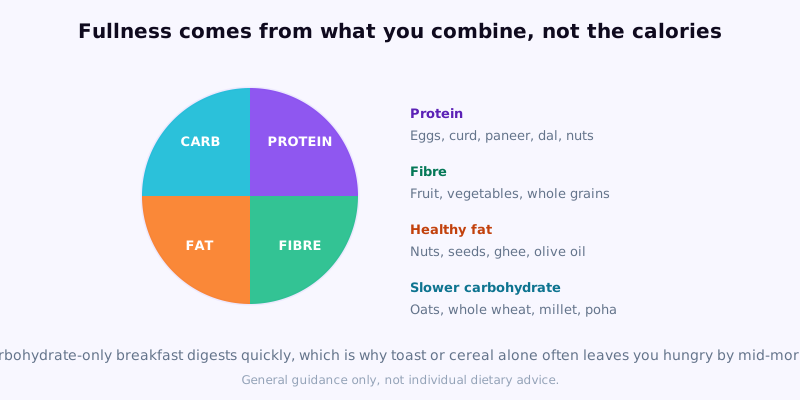
- Protein: Add eggs, yogurt, nut butter, or legumes to make the meal more substantial
- Fibre: Add whole grains, fruit, or vegetables for texture and variety
- Fats: Avocado, nuts, seeds, and olive oil add flavour and richness
- Carbohydrates: Oats, wholegrain toast, and sweet potato make useful breakfast bases
5-Minute Breakfast Ideas
- Greek yogurt with fruit and granola: Layer in a bowl — protein, carbs, and fibre in under 3 minutes
- Peanut butter and banana toast: Wholegrain bread, nut butter, sliced banana, and a drizzle of honey
- Overnight oats: Prep the night before: oats, milk, chia seeds, and any toppings
- Smoothie: Frozen fruit, spinach, protein powder, and milk blended in 90 seconds
- Boiled egg and avocado: Prep eggs the night before for an effortless protein-fat combo
Weekend Breakfast Ideas Worth the Effort
- Shakshuka: Eggs poached in a spiced tomato sauce — stunning, warming, and easy
- Savoury oats with a fried egg: Cook oats in stock, top with a fried egg and chilli flakes
- Veggie omelette: Beaten eggs filled with whatever vegetables are in the fridge
- Banana oat pancakes: Blended oats and banana cooked like pancakes — gluten-free and delicious
- Breakfast grain bowl: Farro or quinoa with roasted vegetables, a soft egg, and tahini
Make-Ahead Breakfast Options
- Overnight oats: Mix in a jar the evening before — grab and eat straight from the fridge
- Egg muffins: Beat eggs with vegetables, pour into a muffin tin, bake, and refrigerate for the week
- Chia pudding: Combine chia seeds and milk, refrigerate overnight, top with fruit in the morning
- Baked oatmeal: Bake a tray of oatmeal on Sunday, slice and reheat portions all week
- Homemade granola: Bake in bulk, store for 2 weeks, and use over yogurt or milk daily
Tips for Building a Better Breakfast Habit
- Prepare the night before: Even laying out ingredients reduces morning friction dramatically
- Keep it simple on weekdays: Save elaborate recipes for when you have time and energy
- Eat within an hour of waking: Your body will start signalling hunger — have something ready
- Don't skip protein: A carb-only breakfast leads to mid-morning energy crashes
- Enjoy it: Sitting down to eat rather than rushing improves both digestion and mood
Balancing Macros at Breakfast for Lasting Energy
The reason many people feel hungry again an hour after breakfast is an imbalance in macronutrients. A breakfast built almost entirely from carbohydrates — toast, cereal, fruit juice — digests quickly and leaves blood sugar spiking then crashing. A well-balanced morning meal combines protein, fat, and fibre to create steady, sustained energy throughout the morning.
- Aim for 20–30g of protein: This is the most important factor in breakfast satiety. Eggs, Greek yogurt, cottage cheese, protein powder, or nut butter all count.
- Include a healthy fat source: Avocado, nuts, seeds, or olive oil slow digestion and support brain function — even a teaspoon of almond butter goes a long way.
- Choose complex carbohydrates: Oats, wholegrain bread, and sweet potato digest slowly. Avoid refined cereals and pastries as your main carbohydrate source.
- Add fibre wherever possible: Chia seeds, ground flaxseed, fresh berries, or half an apple can all be stirred into or served alongside your main breakfast.
- Limit added sugar early in the day: Flavoured yogurts, fruit juices, and sweetened granolas can contain as much sugar as a biscuit — check labels and opt for unsweetened versions.
What to Eat When You're Not Hungry in the Morning
Not everyone wakes up hungry, and forcing yourself to eat a large meal when you have no appetite often backfires. If you consistently lack a morning appetite, it may be because dinner was too late, you're not active enough in the morning, or you've simply never built the habit. You don't need to force a full meal — but giving your body something within an hour or two of waking sets a better metabolic rhythm for the rest of the day.
- Start with something light and liquid: A small smoothie, a glass of milk, or a protein shake is easier to consume than solid food when appetite is low.
- Try a handful of nuts and a piece of fruit: This takes 30 seconds to assemble and provides fat, protein, and natural sugar to gently wake your metabolism.
- Eat your breakfast slightly later: If you're not hungry at 7am, wait until 9am — having something mid-morning is far better than skipping entirely.
- Avoid heavy dinners late at night: Late, large meals suppress morning hunger — shifting dinner earlier often naturally restores a healthy breakfast appetite.
- Build the habit gradually: Start with something very small — even a yogurt or a boiled egg — and increase portion size over a few weeks as your body adjusts.
Breakfast doesn't have to be complicated to be worthwhile. Even a two-minute assembly of quality ingredients — good yogurt, a piece of fruit, a handful of nuts — beats skipping it entirely. Start by making it easy: stock your kitchen with grab-and-go options, try overnight prep a few times a week, and find two or three breakfasts you genuinely enjoy. The habit will follow naturally.
Frequently Asked Questions
Is skipping breakfast bad for you?
It depends on the individual. For many people, especially those who are not hungry in the morning, skipping breakfast has no negative effects on energy or metabolism. However, people who do eat breakfast tend to make better food choices throughout the day and are less likely to overeat at lunch. If you skip breakfast and feel fine, you probably don't need to force it. If you skip it and feel sluggish or overeat later, a small, protein-rich breakfast is worth trying.
What actually makes a breakfast healthy?
A healthy breakfast provides sustained energy rather than a quick spike and crash. The key is combining protein (eggs, Greek yogurt, nut butter), fibre (oats, fruit, whole grain bread), and a small amount of healthy fat (avocado, nuts, seeds). This combination slows digestion and keeps blood sugar stable for hours. Breakfasts high in refined sugar — sweetened cereals, pastries, flavoured yogurts — cause energy crashes mid-morning. Whole foods with minimal added sugar are the reliable foundation.
What are some high-protein breakfast ideas?
Eggs are the easiest high-protein option — scrambled, boiled, or as an omelette with vegetables. Greek yogurt (plain, full-fat) with seeds and berries provides 15–20g of protein per serving. Cottage cheese on whole grain toast is underrated and very quick. A smoothie with protein powder, nut butter, and oat milk takes under 3 minutes. Leftovers from dinner — lentil soup, chicken, or beans — are also legitimate and nutritious breakfast options in many food cultures.
How do you meal prep breakfasts for the week?
Overnight oats are the most meal-prep-friendly breakfast: make 5 jars on Sunday and grab one each morning. Hard-boiled eggs keep in the fridge for up to a week. Egg muffins (eggs baked in a muffin tin with vegetables) reheat in 60 seconds. Smoothie packs — portion your fruit and extras into freezer bags, then blend with liquid each morning — take 2 minutes. Chia pudding sets overnight and lasts 4–5 days. All of these require 20–30 minutes of Sunday prep for a full week of breakfasts.
What should you eat for breakfast when you're not hungry?
If you're not hungry first thing, don't force a large meal. Start small: a handful of nuts, a piece of fruit, or a small yogurt. A small protein-forward snack is better than skipping entirely if you know you'll get hungry and overeat later. Liquid breakfasts — a smoothie or protein shake — are easier to consume when appetite is low. Eating something small within 1–2 hours of waking is a reasonable middle ground for people who are never hungry immediately after rising.