How to Organize a Small Kitchen: 15 Space-Saving Ideas
Organise your kitchen so everything is easy to find and cooking becomes a joy

A well-organized kitchen makes cooking faster, more enjoyable, and far less stressful. When every tool and ingredient has a logical home, you spend less time hunting for the peeler and more time actually cooking. Whether you have a sprawling chef's kitchen or a compact city apartment galley, the principles of good organization are the same: reduce what you don't use, store items near where they're needed, and keep surfaces clear for working.
Key Takeaways
- Declutter before organising. Storage solutions cannot fix having too much equipment.
- Store items near where they are used. Proximity to the task is the most reliable organising rule.
- Clear counters improve daily cooking. Usable surface area matters more than display space.
- Habits keep systems alive. Cleaning as you go prevents the slow return of clutter.
Start with a Kitchen Declutter
Before buying a single organiser or rearranging a single shelf, declutter first. This is the step most people skip, and it's the reason many organisation attempts don't last — you cannot neatly store more than you need. Go through every category: pantry tins and packets (anything past its date goes), kitchen gadgets (if you haven't used it in six months, it doesn't earn counter or drawer space), and dishes and glasses (keep what you realistically use in a week, not the full cabinet's worth). Duplicate tools are worth particular attention — most kitchens have three versions of the same peeler or two colanders. Keep the best one. Donate the rest.
The declutter step also reveals how much space you actually have once the excess is removed. Most people are surprised. A kitchen that felt cramped and chaotic often has perfectly adequate storage once it only holds what belongs there. Work through one category at a time rather than emptying everything at once — it's less overwhelming and easier to make clear decisions category by category.
The Golden Rule: Store Near Where You Use It
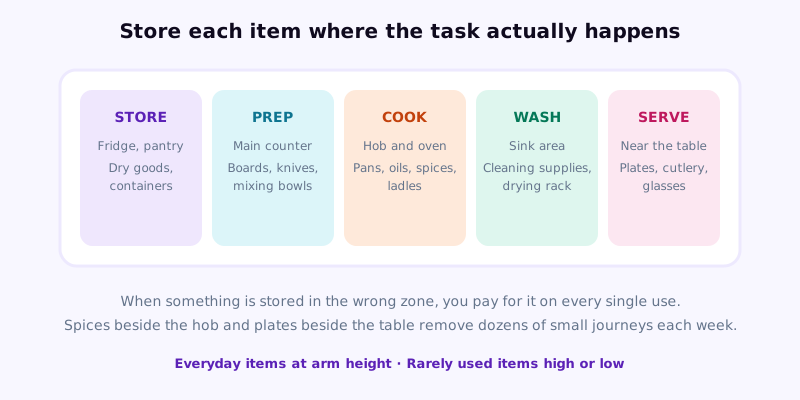
The single principle that most improves kitchen flow is proximity storage — everything lives as close as possible to the place where you use it. Pots and pans belong near the stove, not across the kitchen in the only available cabinet. Cutting boards and knives belong at your prep area. Spices belong beside the cooktop, not in an alphabetised rack across the room. Coffee supplies belong next to the coffee maker. Baking tools — rolling pin, mixing bowls, measuring cups — belong together in one zone near the oven.
This sounds obvious but most kitchens are not organised this way, because items get put away wherever space exists rather than where they're needed. Reorganising around proximity means temporarily making a mess — pulling everything out, mapping where you actually cook and prep, and reassigning storage based on that. It takes an afternoon, but the daily friction of cooking in a poorly mapped kitchen is far more costly over time.
Countertops, Drawers, and Cabinets
Clear countertops are one of the highest-leverage improvements in any kitchen. Every item permanently on the counter should be something you use daily — the coffee maker, the toaster, the knife block. Everything else is taking up prep space and making the kitchen feel smaller and more cluttered than it needs to be. Small appliances used weekly but not daily belong in a cabinet within easy reach. Those used monthly or less belong in a less accessible spot or stored elsewhere entirely.
Inside drawers, dividers transform a chaotic tangle into a functional system. Utensils separated by task — prep tools together, cooking tools together, baking implements in their own section — means grabbing the right thing in the middle of cooking requires no searching. Cabinets benefit from vertical dividers for baking sheets and cutting boards, which are notoriously difficult to store flat. A simple lid rack eliminates the avalanche that happens when you open the pan cabinet. Command hooks on the inside of cabinet doors create invisible storage for measuring cups, pot lids, or frequently used small tools.
Pantry and Fridge Organisation
A pantry organised by category is dramatically easier to use than one where items are stored wherever space was available at the time. Group baking goods together, canned goods together, grains and pulses together, snacks together. Decanting rice, flour, lentils, and pasta into clear airtight containers makes quantities visible at a glance and keeps the pantry looking ordered — it also prevents the situation where three half-open bags of the same thing accumulate at the back. Label homemade sauces, prepped ingredients, and anything that goes into a container without obvious branding, including the date it was made.
In the fridge, zone assignment does the same work. Leftovers at eye level means they get used rather than forgotten. Produce in the crisper drawer keeps it fresher longer. Condiments in the door — where temperature fluctuates most — is exactly what that door shelf is designed for. A weekly check before you shop takes two minutes and prevents the cycle of buying items you already have while letting others go to waste.
The Habits That Keep It Organised
Organisation without maintenance reverts within weeks. The habits that make it stick are small and daily: a ten-minute reset before bed to return everything to its place, wipe down surfaces, and clear the counter. A one-in-one-out rule for new kitchen purchases — when something new comes in, something old goes out. A weekly fridge check before shopping to know what needs using up. A monthly pass through the pantry to catch items approaching their use-by date and build that week's meals around them.
None of these take long individually, but together they prevent the slow accumulation of clutter that makes kitchens feel chaotic. The reset habit in particular is worth building — ten minutes every evening is far less work than a full reorganisation session every few months, and it means every morning starts in a kitchen that is ready to use.
Drawer Dividers and Utensil Organisation
Drawers without dividers quickly become chaotic catch-alls where nothing can be found quickly. A small investment in expandable drawer organisers pays dividends every single day. The goal is to give every utensil a defined slot so you can grab what you need at a glance, even mid-cook with one hand occupied.
- Expandable bamboo dividers: Adjust to fit any drawer width and are easy to reconfigure as your needs change.
- Designate zones by task: One section for prep tools (peeler, grater, zester), another for cooking tools (spatulas, tongs, ladle), and one for baking implements.
- Stand frequently used items upright: A crock or utensil pot beside the stove for your most-reached-for tools keeps the drawer less congested.
- Purge once a year: If a utensil hasn't left its slot in 12 months, it earns a second assessment before keeping its prime drawer real estate.
- Shallow trays for small items: Measuring spoons, bottle openers, and peelers lose themselves in deep drawers — a shallow insert keeps them visible and reachable.
The Clean-As-You-Go Habit
The single most effective kitchen organisation habit isn't a gadget or a storage system — it's a behaviour. Cleaning as you go means wiping down surfaces, rinsing used bowls, and returning ingredients to their spots while the next step of your recipe is underway. It keeps the workspace clear, reduces end-of-meal overwhelm, and makes maintaining your organised system effortless.
- Fill the sink with soapy water before you start: Used bowls and utensils go straight in, making post-cooking washing much faster.
- Use waiting time productively: While onions soften or pasta boils, wipe the counter and put away ingredients you've finished with.
- A damp cloth within reach: Keep one on the counter during cooking to wipe spills immediately rather than letting them dry and crust.
- Return items immediately after use: The spice jar goes back to its spot the moment you've measured from it — not after the dish is done.
- Set a 5-minute after-dinner reset: Load the dishwasher, wipe surfaces, and reset the counter before sitting down to relax. Future you will be grateful every morning.
Frequently Asked Questions
How do I organize a kitchen when I have very limited space?
Start by ruthlessly decluttering — most kitchens contain twice as much as they need. Then maximise vertical space with shelf risers, wall-mounted rails, and hooks inside cabinet doors. Use stackable containers in the pantry and drawer dividers to prevent wasted space. Think in zones: store every item as close as possible to where you use it to make the most of the space you do have.
What are the best kitchen organizers worth buying?
The highest-impact purchases are drawer dividers (transform chaotic drawers instantly), a turntable/lazy Susan for deep cabinets or the fridge, a pull-out organizer for under-sink storage, a pot lid rack, and clear airtight containers for the pantry. These are affordable, universal, and deliver an immediate improvement to daily kitchen life.
How do I organize kitchen cabinets that are always a mess?
Empty the cabinet completely, wipe it clean, then sort items into keep, donate, and discard piles before putting anything back. Group by category — store all baking items together, all small appliances together, all food storage containers with their lids attached or nested together. Use shelf risers to double your vertical space, and place the most frequently used items at the front and at eye level.
Should you declutter before organizing your kitchen?
Yes — always declutter first. Organizing clutter just means neatly storing things you don't need. Go through every category (gadgets, pantry, dishes, cookware) and discard anything broken, expired, duplicate, or unused in the past year. Only after you have reduced your possessions to what you genuinely use should you invest in organizers and storage solutions sized to what remains.
What should I keep versus throw away in my kitchen?
Keep items you use at least once a month, tools that perform a task no other item can do, and quality pieces you love. Discard expired food, broken tools, duplicates (keep the best one), gadgets bought for a single recipe you never made again, and anything damaged or stained beyond use. If you're unsure, box it up and review in three months — if you didn't miss it, donate it.
Kitchen organization isn't a one-time project — it's an ongoing habit. Once you've gone through the initial setup of decluttering, zoning, and storing smartly, the maintenance becomes quick and natural. A kitchen that works for you instead of against you is one of the most impactful things you can do to make daily life easier and cooking more pleasurable.