Home Lighting Ideas: Light Every Room the Right Way
How the right lighting can instantly transform the atmosphere of any room

Lighting is one of the most powerful tools in interior design — and one of the most overlooked. The difference between a room that feels cold and clinical and one that feels warm and inviting is often entirely a matter of lighting. Getting it right doesn't require expensive fixtures or an electrician; it requires understanding a few key principles about how light works and how to layer it to create the mood you want.
Key Takeaways
- Use three layers of light. Ambient, task and accent lighting together solve most room problems.
- Colour temperature sets the mood. Warmer light suits rest; cooler light suits focused tasks.
- One ceiling fixture is rarely enough. A single overhead source flattens a room and casts hard shadows.
- Dimmers are a low-effort upgrade. Adjustable output lets one room serve several purposes.
The Three Layers of Lighting
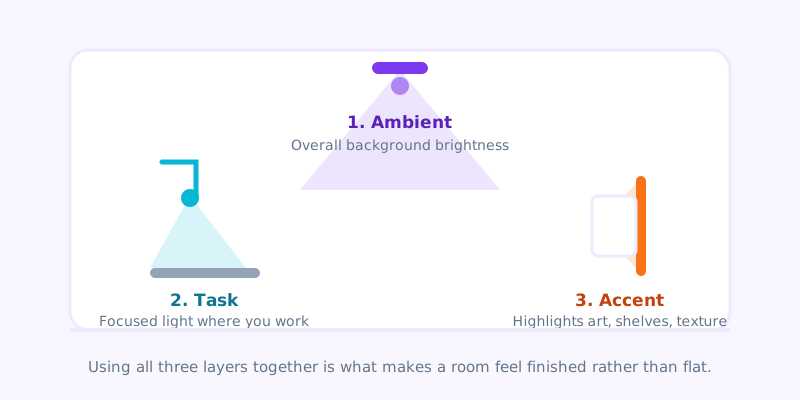
- Ambient (general) lighting: The base layer — overhead fixtures that fill a room with overall light
- Task lighting: Focused light for specific activities — reading lamps, under-cabinet kitchen lights, desk lights
- Accent lighting: Decorative light that highlights objects, textures, or architectural features
Understanding Colour Temperature
| Colour temperature | Appearance | Best suited to |
|---|---|---|
| Warm white (2700–3000K) | Yellowish, cosy and relaxing | Living rooms and bedrooms |
| Neutral white (3500–4000K) | Crisp but not harsh | Kitchens and bathrooms |
| Cool white / daylight (5000–6500K) | Bluish, energising and clinical | Workshops and task areas |
Consistency matters as much as the choice itself. Mixing colour temperatures within a single room looks chaotic, so keep to one range throughout a space.
Room-by-Room Lighting Guide
| Room | Recommended setup |
|---|---|
| Living room | Main overhead, at least two lamps at sofa height, optional accent on shelves or artwork |
| Bedroom | Avoid harsh overhead alone; bedside or reading lights help with winding down |
| Kitchen | Overhead ambient plus under-cabinet task lighting over work surfaces |
| Bathroom | Vanity lights at face height; avoid lights directly above the mirror |
| Hallway and stairs | Well lit for safety, with a warmer tone |
| Home office | Task lighting on the desk, positioned to avoid screen glare |
Quick Lighting Upgrades That Make a Big Difference
- Replace cool bulbs with warm ones: The single fastest way to make a room feel cosier
- Add a floor lamp: Instantly improves ambiance in a living room — particularly in dark corners
- Install a dimmer switch: Dimmable lighting transforms a room's mood in seconds
- Underlit cabinets in the kitchen: Peel-and-stick LED strips take 20 minutes and transform the cooking experience
- String lights in a bedroom: Warm and budget-friendly ambient layer that instantly feels inviting
- Use a lamp on a timer: Automated warm light greeting you home in the evening is a small luxury
Lighting Mistakes to Avoid
- Relying on one overhead fixture: A single central ceiling light creates flat, unflattering illumination
- Lights that are too bright: Brightness isn't always better — consider the mood and activity level
- Mismatched colour temperatures: A mix of warm and cool bulbs in one room looks unintentional
- Ignoring natural light: Work with the daylight your room receives — sheer curtains diffuse it beautifully
- Bulbs at full brightness always: A dimmer allows you to change the room's feel without changing a thing else
Maximising Natural Light in Your Home
Natural light is free and can make a room feel more open and comfortable. Before spending anything on artificial lighting, examine how much daylight your home already receives and what may be blocking it. Small, inexpensive changes can make the room feel brighter.
- Hang curtains high and wide: Mount curtain rods close to the ceiling and extend well beyond the window frame — this maximises the glass area exposed when curtains are open
- Switch to sheer curtains: Sheer or linen curtains diffuse direct sunlight beautifully while maintaining privacy during the day
- Keep windows clean: Dust and grime make glass look dull — clean the inside and outside when needed
- Use mirrors opposite windows: A large mirror on the wall facing a window effectively doubles the light that enters the room
- Choose light-reflective surfaces: Pale walls, glossy tiles, and light flooring bounce light around rather than absorbing it
- Trim exterior plants: Overgrown shrubs and trees outside windows significantly reduce natural light — regular trimming pays off inside
Smart Bulbs and Dimmers: Effortless Lighting Control
Smart bulbs and dimmer switches give you the ability to change a room's mood in seconds without changing a single fixture. They represent the fastest upgrade path for most homes — simple to install, immediately effective, and compatible with almost any existing fitting. Even without a smart speaker, a basic dimmer switch transforms how a room functions throughout the day.
- Dimmer switches for every main room: Full brightness for tasks, mid-level for general evening use, low for winding down — one switch covers all scenarios
- Smart bulbs with app control: Brands like Philips Hue, LIFX, and budget alternatives let you schedule, dim, and change colour temperature from your phone
- Warm and cool modes in one bulb: Tunable white smart bulbs let you shift from energising daylight in the morning to cosy warm white in the evening
- Scenes and schedules: Programme a morning scene (cool, bright) and an evening scene (warm, dim) that activate automatically
- Plug-in smart switches: If rewiring isn't an option, smart plugs on standard lamps give you voice and app control without touching a wall
- Check dimmer compatibility: Not all LED bulbs dim smoothly — look for "dimmable" on the packaging and pair with a leading-edge or trailing-edge compatible switch
Frequently Asked Questions
What are the three types of lighting and why do all three matter?
The three layers are ambient (general room illumination), task (focused light for specific activities), and accent (decorative or highlighting light). Most homes rely only on ambient lighting — typically a single overhead fixture — which creates flat, harsh, or insufficient light. Layering all three types creates depth, flexibility, and the ability to change the room's mood with a switch. A well-lit room uses all three simultaneously at varying intensities.
Should I use warm or cool light in different rooms?
Warm white light (2700K–3000K) creates a cosy, relaxing atmosphere and is best for bedrooms, living rooms, and dining rooms. Cool white or daylight (4000K–5000K) promotes alertness and is better suited to home offices, kitchens, and bathrooms where task clarity matters. Avoid mixing very warm and very cool bulbs in the same space as they clash visually. Most homes benefit from predominantly warm tones with cool options in working zones.
How many lumens do I need per room?
A general guide: living rooms need roughly 1,500–3,000 lumens total (more for large rooms), bedrooms 1,000–2,000 lumens, kitchens 3,000–4,000 lumens (higher for work surfaces), and bathrooms 2,000–3,000 lumens. Rather than exact numbers, aim for layers of adjustable light — dimmable ceiling fixtures plus floor or table lamps — that let you match light levels to the activity and time of day. Dimmer switches are one of the most impactful single lighting upgrades.
What is the best lighting setup for working from home?
For video calls, position your primary light source in front of your face, not behind you (backlighting creates a silhouette). Use a daylight-temperature bulb (4000K–5000K) for focus during work hours. Add a desk lamp for task lighting and reduce screen glare by positioning your monitor perpendicular to windows. After work hours, switch to warmer, dimmer ambient lighting to signal to your brain that the workday is ending — helping with sleep quality.
How can I add more light to a dark room without rewiring?
The simplest solutions require no electrician: add floor lamps and table lamps plugged into existing sockets; use plug-in wall sconces with long cords run along skirting boards; place mirrors opposite windows to reflect and amplify natural light; switch to the highest-lumen bulbs your existing fixtures allow; and paint walls and ceilings in light, reflective colours. Battery-operated LED puck lights or strip lights under shelves and inside cupboards are another easy, no-wiring option.
Great lighting is rarely noticed — it just makes everything feel right. Start by auditing your existing bulbs and replacing any cool-toned ones with warm white versions. Add a lamp in any room that relies solely on overhead lighting. Install a dimmer switch. These three changes alone will transform how your home feels in the evenings, and they cost very little compared to the difference they make.