One Pot Meals: Cook More, Clean Less
Hearty, flavourful meals with minimal washing up — one pot, endless possibilities

One-pot cooking is the weeknight cook's best friend. Everything goes into a single vessel — the cleaning is minimal, the flavours meld beautifully as the ingredients cook together, and dinner is often on the table in 30–45 minutes with very little hands-on time. Once you understand the building blocks of one-pot cooking, you can improvise endlessly with what you have on hand.
Key Takeaways
- Starch and liquid do the work. Cooking pasta or rice in the sauce builds body without extra steps.
- The vessel matters. A wide, heavy pan distributes heat and prevents sticking and scorching.
- Timing is the main skill. Add ingredients in order of how long they need so nothing overcooks.
- Fewer dishes is the real benefit. Cleanup time drops as much as cooking time.
Why One-Pot Meals Work So Well
The appeal of one-pot cooking goes beyond simply having fewer dishes to wash. When ingredients cook together in the same vessel, they share aromatics in a way that doesn't happen when you cook components separately and combine them at the end. The pasta absorbs the flavour of the stock it cooks in. The lentils pick up the cumin and tomato from the base. The rice develops a richness from the chicken and onions around it. This co-cooking is what gives one-pot meals their depth — it's genuinely different from assembly cooking.
The practical benefits compound on top of this. Most one-pot dishes have a significant hands-off period once the liquid goes in — you can leave it simmering and do other things. They're forgiving with substitutions because the technique doesn't depend on exact ingredients, which means they're well-suited to using up what's in the fridge. And they scale easily: a dish designed for two scales to four with almost no adjustment beyond using a larger pot.
One-Pot Pasta
One-pot pasta is one of the most satisfying revelations for weeknight cooking. The method — submerging dried pasta directly in stock, sauce, and aromatics and cooking until absorbed — produces pasta with a sauce-like coating rather than a separately made sauce poured over. Pasta e fagioli, the Italian white bean and pasta soup, is one of the great examples: deeply savoury, filling, and genuinely easy. A creamy tomato pasta made entirely in one pan takes under 20 minutes. Orzo cooked risotto-style with stock, spinach, and feta comes together in one saucepan and eats like a full meal.
The technique relies on correctly estimating liquid quantities — pasta absorbs a specific volume as it cooks, and too much liquid leaves the dish soupy while too little scorches before the pasta is done. Most one-pot pasta recipes specify the ratio; as you make them, you'll develop an instinct for adjusting on the fly. Stirring every few minutes during cooking prevents sticking and keeps the starch that releases from the pasta incorporated into the sauce rather than stuck to the bottom.
One-Pot Rice Dishes
Chicken and rice cooked together in the same pot is probably the most universally loved one-pot meal. The technique is simple: brown bone-in chicken thighs in the pot until the skin is golden, remove them, soften onions in the rendered fat, add rice, stock, and spices, then nestle the chicken back on top and cover for 25 minutes. The chicken flavours the rice as it cooks, and the result tastes like it took considerably more effort than it did. The same structural approach works across cuisines — tomato rice (South Indian style with mustard seeds and curry leaves), pilaf with roasted vegetables, or a biryani-style layered dish all follow a version of this sequence.
Rice in one-pot cooking requires a different approach to heat than pasta. Once the liquid comes to a simmer and the lid goes on, resist lifting it — the steam inside does most of the cooking, and releasing it extends the time considerably. Most rice dishes finish on the lowest heat setting with the lid on tight. Letting the dish rest off the heat for five minutes before serving makes the texture noticeably better and prevents the mushiness that comes from serving immediately.
Soups, Stews, and Braises
The one-pot category covers everything from a 25-minute red lentil soup to a three-hour beef braise, and both are exactly as simple to execute — time is doing the work, not technique. A basic vegetable soup or chicken soup follows the same sequence: soften aromatics (onion, celery, carrot), add liquid, add ingredients in order of how long they take to cook, simmer, season, serve. A lentil soup adds cumin and tomatoes to the aromatics stage and takes no longer than 25 minutes from starting to eating. Minestrone with whatever vegetables need using up and a handful of pasta or cannellini beans is an equally fast, equally satisfying result.
For braises and stews — the slower end of one-pot cooking — the key extra step is searing. Browning the meat before the liquid goes in creates a layer of flavour through the Maillard reaction that cannot be replicated any other way. It's the difference between a rich, complex stew and a pale, flat one. Don't rush the browning: dry the meat before it goes in, work in batches so the pan doesn't steam, and wait until each piece releases cleanly before turning it. That initial ten minutes determines the depth of the whole dish.
Techniques for Better One-Pot Results
Building flavour in layers is the single most useful technique to understand for one-pot cooking. Start with fat and aromatics — onion, garlic, ginger, or whatever the dish calls for — and cook them until genuinely softened and beginning to colour. Add any dry spices at this point so they bloom in the fat. Then add any tomatoes or other wet ingredients and cook them down before adding stock or water. This sequence ensures the base is fully developed before dilution. Skipping straight to the liquid stage produces a flat result regardless of how long the dish simmers afterward.
Season in stages rather than all at once. A small amount of salt when the aromatics go in helps them soften and release moisture. Another pinch when liquid goes in establishes the baseline. The final seasoning adjustment happens right before serving, when you can taste the full dish and make precise corrections. Finishing with acid — a squeeze of lemon, a splash of vinegar, or a few capers — is a technique worth building into every one-pot dish. It brightens the flavour and adds a contrast that makes the dish taste more complete and less flat, particularly after a long simmer.
Choosing the Right Vessel for One-Pot Cooking
The pot or pan you choose has a real impact on the outcome of your dish. Different vessels distribute heat differently, hold different amounts of liquid, and suit different cooking methods. Investing in even one good all-purpose pot will dramatically expand what you can cook with minimal equipment.
- Dutch oven (cast iron or enamel): The gold standard for one-pot cooking — retains heat evenly, goes from hob to oven, and handles everything from soups to braises to bread.
- Wide, deep skillet or sauté pan: Ideal for one-pot pastas and rice dishes where you want more surface area and quicker evaporation.
- Pressure cooker or Instant Pot: Cuts cooking time dramatically for beans, tough cuts, and stews — a genuine time-saver on weeknights.
- Slow cooker: Perfect for morning prep — load it before work and return to a fully cooked meal. Works best for braises, soups, and chillies.
- Heavy-bottomed saucepan: Great for risottos, lentil dishes, and any recipe where even, gentle heat is needed to prevent scorching.
Getting the Timing Right for Different Ingredients
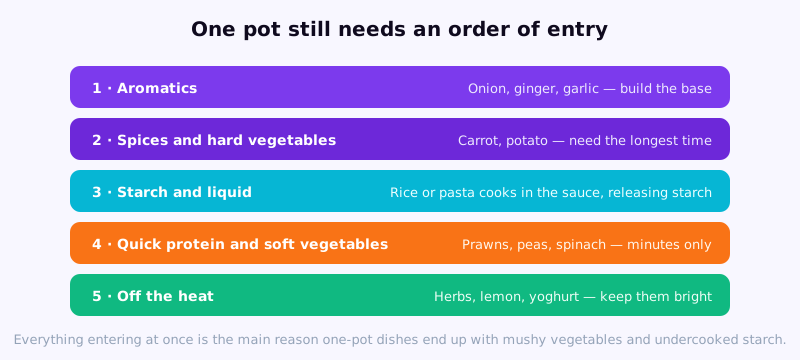
One of the trickiest aspects of one-pot cooking is making sure every ingredient is cooked to perfection simultaneously. Overcooked vegetables and undercooked grains are the most common pitfalls. The solution is simple: understand which ingredients are fast and which are slow, then add them at the right moment.
- Add slow-cooking ingredients first: Dried beans, tough root vegetables, and whole grains need the longest time — start them well before anything else.
- Proteins mid-way: Chicken thighs and fish cook in 15–25 minutes depending on size — adding them too early leads to dry, overcooked results.
- Delicate vegetables near the end: Spinach, peas, courgette, and frozen vegetables only need 3–5 minutes — stir them in for the final stretch.
- Fresh herbs and greens at the very end: Add fresh basil, coriander, or baby kale with the heat off to preserve colour and brightness.
- Pre-cook if needed: For very long braises, partially cook starchy vegetables separately to add in the last 20 minutes, preventing them turning to mush.
Frequently Asked Questions
What is the best pot for one pot cooking?
A Dutch oven (enamelled cast iron) is the best all-round one pot cooking vessel. It heats evenly, retains heat well, and can go from hob to oven seamlessly. A 5–6 litre size handles everything from soups and stews to braises. If you don't have a Dutch oven, a heavy-bottomed stainless steel pot or deep sauté pan works well for most weeknight dishes.
How do you prevent burning in one pot meals?
Use medium-low heat once the liquid is in, and check the liquid level periodically — most burning happens when liquid evaporates and food sticks to the bottom. Heavy-bottomed pots distribute heat more evenly and burn far less than thin ones. Stirring occasionally (especially for rice and pasta dishes) prevents sticking, and adding a splash of stock or water rescues anything starting to catch.
Can you make one pot meals healthy?
Absolutely. One pot cooking is actually well-suited to healthy eating — you control every ingredient, and cooking liquids (stock, tomatoes, coconut milk) replace the need for heavy cream or large amounts of oil. Load them up with vegetables, use lean proteins and legumes, and opt for whole grains like brown rice or quinoa. The key is building flavour with spices and herbs rather than relying on fat or salt.
What are the best one pot meals for beginners?
Start with a one-pot lentil soup or tarka dal — they're forgiving, flavourful, and very difficult to get wrong. Chicken and rice is another excellent beginner dish: brown the chicken, add rice and stock, cover and cook. One-pot pasta is also a great starting point because the method is intuitive and results are impressive. All three build the core skills you'll use in every other one-pot recipe.
How do you add vegetables to one pot dishes without overcooking them?
The key is timing. Add dense root vegetables (carrots, potatoes, turnips) near the start of cooking. Add medium-density vegetables (courgette, capsicum, green beans) in the middle. Add leafy greens, peas, and frozen vegetables in the final 3–5 minutes. Fresh herbs and delicate leaves like baby spinach should go in with the heat off, stirred through just before serving.
One-pot cooking rewards simplicity and patience. The longer something simmers, the more the flavours develop and meld — so resist the urge to rush. Once you've made a few of these dishes, you'll start to see the pattern: brown, build the base, add liquid, and let time do the work. It's one of the most relaxed and satisfying approaches to cooking there is.