30 Pantry Essentials Every Kitchen Needs
Stock your pantry with the right staples and always have a meal ready to make

A well-stocked pantry is one of the most valuable things in a home kitchen. When you have the right staples on hand, you can pull together a satisfying meal from seemingly nothing — no trip to the shop needed. The goal isn't to fill every shelf with every ingredient imaginable; it's to maintain a curated collection of versatile items that give you maximum flexibility with minimum waste.
Key Takeaways
- A pantry is a system, not a shopping list. Grains, tinned goods, fats and seasonings combine into meals.
- Rotate stock using FIFO. Placing new purchases behind older ones prevents quiet waste.
- Acids and condiments carry flavour. Vinegars and sauces rescue otherwise plain staples.
- Keep a few emergency meals in mind. Knowing two or three pantry-only dinners avoids last-minute takeaway.
Grains and Pasta
Grains and dried pasta are the backbone of pantry cooking because they are the carbohydrate base for more meals than any other category. Long-grain white rice is the most universally useful — it's neutral enough for any cuisine, cooks consistently, and stores for a year or more. Keeping two or three shapes of dried pasta covers a wide range of sauces: a long shape like spaghetti or linguine for olive oil and tomato sauces, a short ridged shape like rigatoni or penne for chunky or cream-based sauces, and a small shape like orzo for soups and baked dishes. Rolled oats handle breakfasts, crumbles, and can be blended into flour for baking. A bag of plain flour enables thickening, coating, and a wide range of baking, making it one of the most versatile items on any shelf.
If you cook Indian food at home, basmati rice is worth stocking alongside long-grain rice — it's a different texture and aroma that doesn't substitute well. Red or yellow lentils are also worth treating as a grain-category staple rather than a legume; they cook from dry in 20 minutes without soaking, which makes them genuinely useful on weeknights in a way that dried chickpeas or kidney beans are not.
Canned and Jarred Goods
Canned tomatoes are the most important thing in a well-stocked pantry, and the variety worth buying is crushed or whole peeled rather than diced — the texture is better and they cook down into smoother sauces. Canned tomatoes are the base for pasta sauces, soups, shakshuka, Indian curries, braises, and a dozen other dishes. Coconut milk is the second most versatile canned liquid — it adds body and richness to curries and soups across South Asian, Southeast Asian, and Caribbean cooking, and works in desserts and smoothies too. Keep at least two or three tins of both on hand at all times.
Canned legumes — chickpeas, kidney beans, and cannellini beans — are among the best time-savers in the pantry. They're pre-cooked, ready to use after rinsing, and protein-rich enough to anchor a meal without any other protein. Canned tuna or sardines are similarly useful: fast, requiring no cooking, and genuinely good in pasta, on toast, or in a composed salad. Stock — vegetable or chicken — adds depth to rice dishes, soups, pan sauces, and risottos in a way that water simply cannot replicate, and is worth keeping a supply of good-quality stock in cartons or concentrate.
Oils, Vinegars, and Condiments
Two oils cover almost all purposes: a neutral high-heat oil (canola, sunflower, or vegetable) for frying, sautéing, and roasting at high temperatures, and olive oil for dressings, finishing drizzles, and Mediterranean-style cooking. Using olive oil for high-heat cooking is fine, but its flavour compounds degrade at high temperatures, so the finishing drizzle or dressing is where its quality makes the most difference. Soy sauce is the most important condiment for adding umami depth — a small splash into a stew, fried rice, or marinade adds a dimension that's hard to place but distinctly improves the dish. Fish sauce serves a similar function in South and Southeast Asian cooking.
Vinegar handles acidity, which is the flavour note most home-cooked food is short on. White wine vinegar and red wine vinegar cover dressings, pickles, and deglazing; apple cider vinegar does similar work with a slightly softer edge. Dijon mustard both adds flavour and emulsifies dressings, keeping them cohesive rather than separated. Chilli flakes or hot sauce provide heat without adding liquid volume or complexity, which makes them useful finishers for dishes that are already seasoned but need brightness.
Dried Herbs and Spices
A small, curated spice rack covers far more cooking than a crowded one full of things you bought for one recipe and never used again. The core trio for Indian and Middle Eastern cooking is cumin, coriander, and turmeric — these three alone enable a wide range of dishes and appear together in most spice blends from those cuisines. Smoked paprika adds depth and a pleasant smokiness to anything from eggs to beans to roasted vegetables. Sweet paprika is more versatile in European-style cooking. Dried oregano and thyme are the Mediterranean herb base — they appear in pasta sauces, roasts, braises, and grain salads. Bay leaves are worth keeping for anything slow-cooked; they add a subtle background note that's difficult to identify but noticeably absent without them.
Garlic powder and onion powder seem redundant if you always have fresh garlic and onions, but they serve a slightly different purpose — distributing flavour evenly through a dry rub, a spice mix, or a soup where you want the depth without the texture. Cinnamon is worth having as a spice that crosses sweet and savoury lines — it appears in Indian and Moroccan cooking as a background warming note, as well as in the obvious baking applications. Replace spices when they lose their scent rather than on a fixed schedule; whole spices last longer than ground, and buying whole and grinding as needed produces noticeably better results.
Refrigerator and Freezer Essentials
Eggs are the most versatile ingredient in the kitchen and the one most worth always having. They work at every meal — breakfast scrambles, lunchtime frittatas, fried rice, shakshuka, pasta carbonara — and they cook quickly enough to be a genuine weeknight fallback. Butter adds richness to sauces, vegetables, and baked goods in a way nothing else quite replicates. A hard aged cheese — Parmesan, Pecorino, or a good cheddar — grated over pasta, soup, eggs, or vegetables adds immediate richness and depth, and keeps for weeks in the fridge wrapped well.
Fresh garlic and onions are foundational to the flavour base of almost every cuisine and should never run out. In the freezer, peas and sweetcorn are the most useful no-prep vegetables — they go from frozen to cooked in three minutes and add colour and sweetness to fried rice, pasta, and soups with no preparation. Frozen prawns or fish fillets are the fastest protein in the freezer: defrost in cold water in 15 minutes, or add directly to a curry or stir-fry. They go from solidly frozen to cooked and on the plate faster than any other protein option and require no planning ahead.
Rotating Your Pantry Stock with FIFO
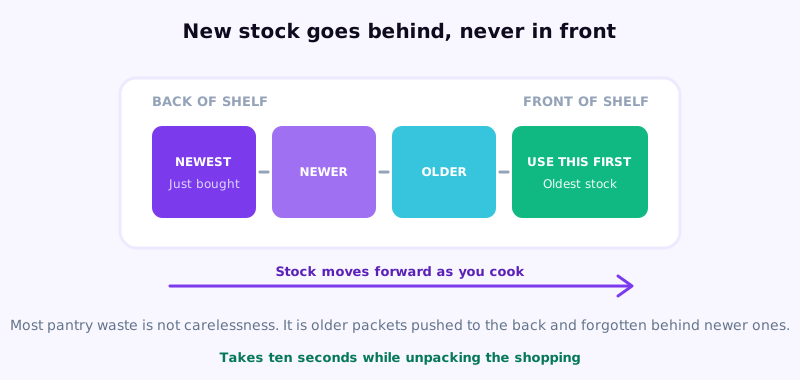
First In, First Out — FIFO — is the stock-rotation method used by professional kitchens and supermarkets alike, and it is equally valuable at home. The principle is simple: when you buy new items, move existing stock to the front and place new purchases behind them. You always reach for the oldest item first, which means nothing quietly expires at the back of a shelf unnoticed.
- Unpack groceries mindfully: Before placing new tins or packets on the shelf, pull forward any existing stock so new items land behind them.
- Date everything you open: Write the opening date on the lid or side with a marker — particularly important for oils, vinegars, and dried spices, which degrade gradually after opening.
- Do a monthly audit: Spend five minutes scanning shelves for anything approaching its best-before date and plan a meal around it that week.
- Organise by category zones: Keep all grains together, all canned goods together, all condiments together. This makes auditing easier and ensures you can see everything in each category at once.
- Shorter-dated items at eye level: Items that expire soonest should be the most visible, not buried behind newer stock where they're easy to forget.
Emergency Meals from Pantry Staples
A thoughtfully stocked pantry should be able to produce a satisfying meal on nights when shopping didn't happen, fresh produce is gone, and takeout isn't an option. Knowing a handful of pantry-only meal formulas means you are never truly without dinner options. The best emergency pantry meals are ones you'd happily eat on a normal night — not a compromise, just resourceful cooking.
- Pasta aglio e olio: Spaghetti, olive oil, garlic, chilli flakes, and Parmesan — ten minutes, four ingredients, genuinely delicious.
- Tarka dal: Red lentils, canned tomatoes, onion powder, cumin, and turmeric — nutritious, filling, and ready in 25 minutes.
- Fried rice: Leftover cooked rice (or freshly made), soy sauce, a tin of sweetcorn, garlic, and whatever else is on hand — a flexible pantry classic.
- Bean soup: Two tins of any beans, vegetable stock, canned tomatoes, paprika, and dried herbs simmered for 20 minutes — a complete protein-rich meal.
- Tinned fish on toast: Sardines or tuna with a drizzle of olive oil, lemon juice from the bottle, and black pepper — simple, protein-packed, and surprisingly satisfying.
Frequently Asked Questions
How do you organize a pantry from scratch?
Start by grouping items into clear zones: grains and pasta together, canned goods together, oils and condiments together, spices together. Use clear containers for things you buy in bulk (rice, oats, lentils) so you can see levels at a glance. Keep most-used items at eye level and store rarely-used items higher or lower. Label everything with the contents and, for homemade stores, the date.
How long do pantry staples last?
Storage life depends on the product, packaging, temperature, humidity, and the meaning of the date label in your country. Keep dry goods sealed, cool, and dry; rotate older items first. For canned goods, follow local food-safety guidance and discard cans that are leaking, bulging, badly rusted, or spurting when opened. Check the label and the manufacturer's guidance for oils and other opened products rather than applying one fixed timeline.
What should you buy first when stocking a pantry from nothing?
Prioritise in this order: neutral cooking oil, salt, dried pasta or rice, canned tomatoes, canned beans or lentils, a few key spices (cumin, turmeric, coriander, chilli flakes), garlic, onions, and eggs. This gives you the ability to make a dozen different meals before adding anything else. Add other items gradually each shopping trip.
What are the pantry essentials for Indian cooking specifically?
An Indian pantry centres on: mustard seeds, cumin seeds, turmeric, coriander powder, chilli powder, garam masala, curry leaves (dried work fine), dried red chillies, ghee or neutral oil, red or yellow lentils, basmati rice, canned tomatoes, and dried chickpeas or kidney beans. With these 13 items you can make a full repertoire of everyday Indian dishes.
How do you shop for pantry staples on a budget?
Buy dried versions of things rather than canned when you have time to cook them — dried lentils and chickpeas are a fraction of the cost of canned. Purchase spices from Indian or Asian grocery stores where they're sold in larger, cheaper bags than supermarkets. Buy staples like rice, flour, and pasta in bulk sizes. Set a small "pantry top-up" budget each week rather than restocking everything at once.
What can I cook when I have almost nothing at home?
With rice or pasta, lentils or beans, onions, garlic, canned tomatoes, oil, salt, and two or three spices, you can make a simple dal, tomato pasta, spiced rice, or bean stew. Start by checking what needs using first, then choose one base, one protein-rich ingredient, and one flavour direction. A small pantry is more useful when its ingredients combine across several meals.
How do I know which pantry staples to buy first?
Buy ingredients that support several meals rather than specialised products for one recipe. Start with a cooking oil, salt, rice or pasta, lentils or beans, onions, garlic, canned tomatoes, and a small group of spices you already use. Add items only after you have a plan for storing and using them, so the pantry grows around your actual cooking habits instead of becoming a collection of forgotten ingredients.
Your pantry is your creative foundation. With these essentials stocked and rotated regularly, you'll be able to cook confidently on weeknights, improvise when plans change, and waste far less food than when shopping without intention. Build it up gradually — adding a few items each shop — and within a month you'll have a kitchen that feels genuinely capable of anything.