Small Space Living: Make Your Tiny Home Feel Bigger
Live comfortably and stylishly in a small space with these clever ideas

Living in a small space has its challenges, but it also has real advantages: easier to clean, cheaper to heat and cool, and it forces the kind of intentional living that leads to less clutter and more appreciation for what you keep. With the right furniture choices, decorating techniques, and storage strategies, you can make a compact home feel open, comfortable, and genuinely beautiful — often more so than a larger space poorly used.
Key Takeaways
- Measure before every purchase. In a small home, one oversized piece disrupts the whole layout.
- Visual tricks change how large a room feels. Sightlines, legs on furniture and light shape perception.
- Hidden storage earns its place. Furniture that stores as well as functions does double work.
- Regular decluttering is non-negotiable. Small spaces show accumulation immediately.
Measure Before You Buy
Start with a simple floor plan before ordering furniture or storage. Measure the room's length and width, door swing, window clearance, radiator or vent positions, and the narrowest part of the route from the entrance to the room. Mark proposed furniture on the floor with masking tape for a day. If you cannot walk around it comfortably, open the required doors or still have a clear route to the window, the piece is too large even if its published dimensions look suitable.
- Record three dimensions: the available footprint, the maximum height, and the access width needed to bring the item inside.
- Protect a clear route: keep the path between the entrance, bed, cooking area, and bathroom usable without moving furniture.
- Choose one job per storage zone: label a shelf or box by category before buying another organiser.
- Use a 48-hour pause: save the item, measure the space, and identify what will leave before purchasing it.
The Visual Principles That Make Spaces Feel Larger
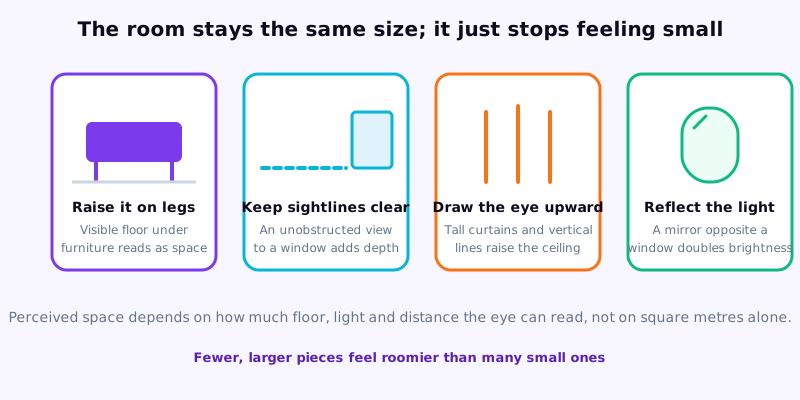
- Light colours on walls and ceilings: Pale walls reflect light; dark walls absorb it and advance toward you visually
- Consistent flooring: One continuous flooring material throughout makes a space feel uninterrupted
- Unobstructed sightlines: Keep low furniture and clear pathways from one end of the room to the other
- Mirrors strategically placed: Opposite windows, they double the apparent depth of a room
- Vertical elements: Tall bookcases, floor-to-ceiling curtains, and vertical stripes draw the eye up
Furniture Choices for Small Spaces
- Legs matter: Furniture on legs shows floor underneath, which makes rooms feel less cramped
- Multi-function pieces: A storage ottoman, a sofa bed, a dining bench with hidden storage
- Scale to the room: One large sofa often works better than two small chairs cluttering the room
- Nesting tables: Use together when needed, stack away the rest of the time
- Wall-mounted desks and foldaway tables: Fold flat against the wall when not in use
- Transparent furniture: A glass coffee table or acrylic chair takes up visual space without blocking sightlines
Storage Strategies for Compact Homes
- Go vertical: Use wall space from floor to ceiling — shelves, cabinets, and hooks all work
- Under-bed storage: Bed risers or low-profile storage boxes reclaim a large hidden zone
- Inside cabinet doors: Hooks, racks, and magnetic strips turn dead space into functional storage
- Hallway as storage: Built-in benches with lids, coat hooks, and overhead cabinets maximise entry space
- Ottoman with storage: One piece that serves as seating, footrest, and hidden storage
- Stair storage (if applicable): Drawers built into stair risers are among the most efficient uses of space
Decorating a Small Space Well
- Edit ruthlessly: Every item in a small space is visible — clutter is amplified, so curate carefully
- One large artwork over many small ones: A single statement piece reads as intentional rather than cluttered
- Continuity of colour: Using the same colour palette across rooms creates visual flow and spaciousness
- Plants add life without bulk: A hanging plant or window box adds greenery without using floor space
- Curtains hung high and wide: Hang curtains at ceiling height and extend beyond the window frame to maximise light
Small Space Living Mindset
- Own less, enjoy more: Each item you don't own is one you don't have to store, clean, or move
- Appreciate the benefits: Less time cleaning, less money to heat and cool, more intentional possessions
- Build systems, not piles: Every category of thing needs a designated home — not a pile
- Review and edit seasonally: Regular decluttering keeps a small space from feeling overwhelmed
Furniture with Hidden Storage: Making Every Piece Work Twice
In a small space, every piece of furniture needs to justify its footprint. A storage ottoman that only functions as a footrest, or a bed frame with no under-bed access, are missed opportunities. The principle of dual-function furniture isn't about buying clever gimmicks — it's about ensuring that the pieces you need anyway are doing double duty wherever possible.
- Storage ottomans: Replace a standard coffee table or footrest with a lidded ottoman — inside hides throws, board games, or spare bedding
- Beds with drawer bases: Divan beds with built-in drawers eliminate the need for a separate wardrobe or chest of drawers in a small bedroom
- Window seats with lift-up lids: A built-in bench in a bay window or alcove creates seating, a focal point, and a chest's worth of storage underneath
- Sofa beds and daybeds: In a studio or guest room, a sofa bed means the same space serves as both living area and sleeping area without compromise
- Dining benches with storage: A hallway or dining bench with a hinged lid stores shoes, bags, or seasonal items out of sight
- Shelving with baskets: Open shelves with lidded baskets maintain visual tidiness — the basket hides the contents while remaining accessible
Regular Decluttering: The Non-Negotiable Small-Space Habit
In a small home, clutter has nowhere to hide. What might go unnoticed in a large house with spare rooms and wide hallways becomes oppressive in a compact space within days. The most effective strategy isn't better storage — it's owning less. Regular, scheduled decluttering keeps the space functional and prevents the creeping accumulation that makes even well-designed small homes feel cramped.
- Seasonal declutter as a rule: Every three months, review clothing, kitchen equipment, and paperwork — remove anything unused since the last review
- One in, one out: Every new item brought into a small home should displace something already there — this prevents net accumulation over time
- The six-month test for clothes: If you haven't worn it in six months and it isn't seasonal, it's occupying space it will never earn back
- Digital first for paperwork: Scan and store documents digitally — paper piles are a major source of visible clutter in small spaces
- Flat surfaces stay clear: Treat worktops, coffee tables, and windowsills as intentional spaces, not storage — items placed there need a permanent home elsewhere
- Donate immediately: A bag of items to donate left sitting in the hallway is still clutter — make the trip the same week you decide to let things go
Small spaces become homes when they're thoughtfully edited and smartly arranged. The biggest transformations often come not from buying more storage, but from owning less. Start by ruthlessly editing what you keep, then invest in furniture that works harder, and use the decorating principles that expand visual space. A small home done well is a genuine pleasure to live in.
Frequently Asked Questions
How to make a small living room feel bigger?
Use a light colour palette on walls and avoid dark paint that closes in the space. Place a large mirror opposite the main window to reflect light and double the visual depth. Choose furniture on legs to show floor space underneath, hang curtains at ceiling height rather than window height, and keep the floor as clear as possible. A single large rug reads better than multiple small ones.
What is the best furniture for small spaces?
Multi-function furniture is the best investment: storage ottomans, sofa beds, beds with built-in drawers, and dining benches with lift-up lids. Transparent furniture — glass coffee tables, acrylic chairs — takes up visual space without blocking sightlines. Nesting tables are invaluable: use all of them when needed, tuck them away when not. Avoid bulky sectional sofas; a streamlined two-seater with an armchair often works better.
Do mirrors actually make rooms look bigger?
Yes — mirrors are one of the most effective tools for making a small room feel larger. Placing a large mirror on the wall opposite a window reflects the outdoor view and natural light, effectively doubling the perceived depth of the room. Full-length mirrors leaned against a wall also work well. The effect is strongest with large mirrors; small decorative mirrors have minimal impact on perceived space.
How to have enough storage in a small apartment?
Go vertical — use wall space all the way to the ceiling with tall shelving or floor-to-ceiling cabinets. Maximise dead zones: under the bed, inside cabinet doors, above the fridge, and in hallway walls. Replace standard furniture with storage equivalents wherever possible. Finally, edit your possessions regularly — the most effective storage strategy is simply owning less. A one-in-one-out rule prevents slow accumulation.
What are the best colours for small rooms?
Light, cool neutrals — soft whites, pale greys, and warm creams — reflect the most light and make rooms feel open. Using the same colour throughout (walls, ceiling, and trim in a similar tone) removes visual boundaries that chop up space. Contrary to popular belief, you can use deeper colours in small rooms, but keep them to one wall and pair with plenty of light and mirrors. Avoid high-contrast colour schemes, which visually fragment a compact space.