Time Management Tips That Actually Work
Time management strategies for choosing priorities and making room for focused work

Time is our most precious and finite resource. Unlike money, once spent, it can never be regained. Mastering time management isn't about cramming more activities into your day—it's about aligning your time with your values, priorities, and goals to create a life of purpose and fulfillment. The goal is not to be busy, but to be effective, creating space for what truly matters while maintaining your wellbeing and personal time.
Key Takeaways
- Know where your time actually goes. Estimates and reality usually differ significantly.
- Prioritise by importance, not urgency. Urgent tasks crowd out work that matters more.
- Manage energy alongside hours. Demanding work belongs in your most alert periods.
- Plan for interruptions. Treating them as inevitable makes schedules more realistic.
The Time Management Mindset Shift
Effective time management starts with changing how you think about time:
- From managing time to managing energy: Focus on when you're most productive
- From doing more to doing what matters: Quality over quantity
- From perfect planning to flexible systems: Adaptability over rigidity
- From time scarcity to time abundance: Focus on what you can control
- From reactive to proactive: Plan rather than respond
Understanding Your Time Reality
Time Audit Exercise
Before optimizing your time, understand how you currently spend it:
- Track everything: Log activities in 15-30 minute blocks for one week
- Categorize activities: Work, personal care, family, leisure, commuting, etc.
- Identify patterns: When are you most/least productive?
- Find time drains: What activities consume time without adding value?
- Spot opportunities: Where can you optimize or eliminate?
Energy Mapping
Match your most important tasks to your highest energy periods:
- Peak hours: Schedule creative and complex work
- Good hours: Handle routine tasks and meetings
- Low hours: Do administrative work and planning
- Recovery time: Build in breaks and restoration
The Priority Matrix: What Matters Most
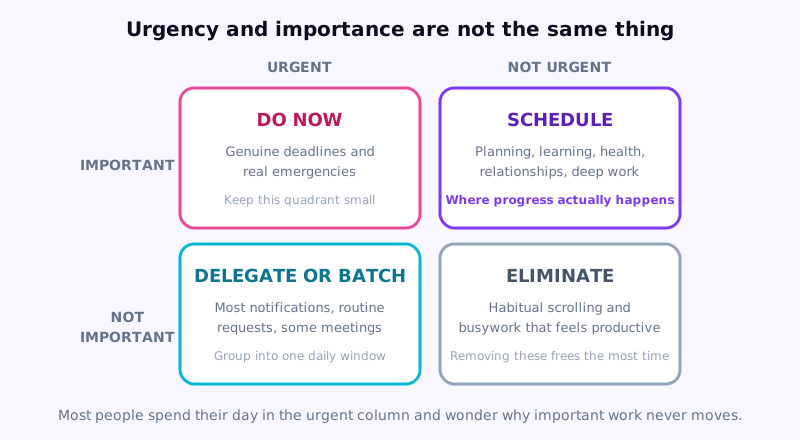
Eisenhower Decision Matrix
Categorize tasks based on urgency and importance:
- Quadrant 1 (Urgent + Important): Crises, emergencies - Do immediately
- Quadrant 2 (Not Urgent + Important): Prevention, planning - Schedule
- Quadrant 3 (Urgent + Not Important): Interruptions, some emails - Delegate
- Quadrant 4 (Not Urgent + Not Important): Time wasters - Eliminate
The 80/20 Rule (Pareto Principle)
Focus on the 20% of activities that produce 80% of your results:
- Identify your highest-impact activities
- Eliminate or minimize low-value tasks
- Invest more time in effective, high-return activities
- Regularly reassess what drives your best outcomes
Goal-Aligned Time Management
The Three Horizons of Focus
- Horizon 1 (Today/This Week): Daily tasks and immediate priorities
- Horizon 2 (This Month/Quarter): Projects and medium-term goals
- Horizon 3 (This Year/Beyond): Vision, values, and long-term aspirations
Backward Planning
- Start with your long-term goal
- Break it into quarterly milestones
- Identify monthly targets
- Plan weekly actions
- Schedule daily tasks
Planning Systems That Work
Weekly Planning Ritual
Spend 30 minutes each week planning the upcoming week:
- Review the past week: What worked? What didn't?
- Check your calendar: Note fixed appointments and commitments
- Identify priorities: Choose 3-5 most important outcomes
- Schedule focused work: Block time for your priorities
- Plan for obstacles: Anticipate challenges and solutions
- Include self-care: Schedule rest, exercise, and personal time
Daily Planning Methods
The MIT Method (Most Important Tasks)
- Choose 1-3 most important tasks for the day
- Complete these before anything else
- Everything else is bonus
Time Blocking
- Assign specific time slots to different activities
- Include buffer time between tasks
- Batch similar activities together
- Protect your blocks from interruptions
The Two-List Strategy
- List A: Must-do tasks (usually 2-3 items)
- List B: Should-do tasks (everything else)
- Only work on List B after completing List A
Beating Common Time Wasters
Digital Distractions
- Notification management: Turn off non-essential alerts
- App limits: Use built-in screen time controls
- Website blockers: Temporarily restrict access to distracting sites
- Phone placement: Keep devices out of sight during focused work
- Designated check times: Schedule specific times for email and social media
Perfectionism
- Good enough standards: Define "done" before starting
- Time limits: Set deadlines for tasks to prevent over-polishing
- Progress over perfection: Value completion over perfection
- Feedback loops: Get input early and iterate
Procrastination
- Break it down: Divide large tasks into smaller, manageable steps
- Start small: Commit to just 10 minutes of work
- Remove barriers: Eliminate obstacles that make starting difficult
- Use deadlines: Create artificial urgency for motivation
- Reward progress: Celebrate small wins along the way
Advanced Time Management Techniques
The Pomodoro Technique
- Work for 25 minutes with complete focus
- Take a 5-minute break
- Repeat 3-4 cycles
- Take a longer 15-30 minute break
Batch Processing
Group similar tasks together to reduce context switching:
- Email batches: Check and respond to emails 2-3 times daily
- Meeting blocks: Schedule all meetings on specific days
- Content creation: Write multiple articles or posts in one session
- Administrative tasks: Handle paperwork and filing together
The Two-Minute Rule
- If a task takes less than 2 minutes, do it immediately
- Prevents small tasks from accumulating
- Reduces mental overhead of tracking minor items
Energy Management
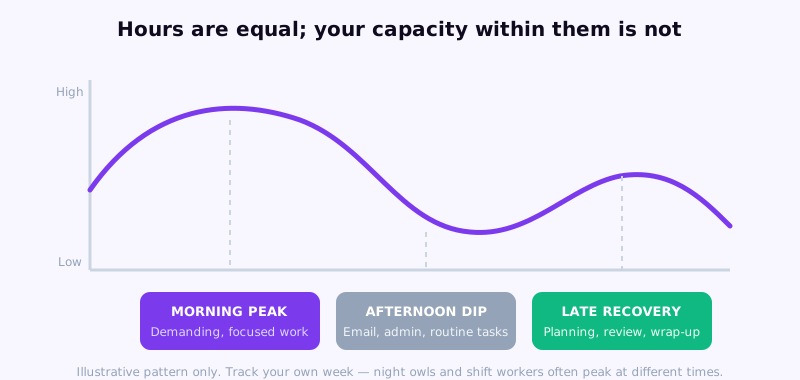
Understanding Your Ultradian Rhythms
Work with your natural 90-120 minute focus cycles:
- Identify when you naturally feel alert and focused
- Schedule demanding work during peak periods
- Take breaks when energy naturally dips
- Use low-energy periods for routine tasks
Energy Restoration Strategies
- Micro-breaks: 2-5 minute breaks every hour
- Power naps: 10-20 minute rest periods when possible
- Nature breaks: Step outside for fresh air and sunlight
- Movement breaks: Stretch, walk, or do light exercise
- Breathing exercises: Deep breathing to reset focus
Technology Tools for Time Management
Essential Apps and Tools
- Calendar apps: Google Calendar, Outlook for scheduling
- Task managers: Todoist, Any.do for organizing tasks
- Focus apps: Forest, Freedom for eliminating distractions
- Time tracking: RescueTime, Toggl for understanding usage
- Note-taking: Notion, Evernote for capturing ideas
Automation Opportunities
- Recurring calendar events and reminders
- Email filters and auto-responses
- Bill payment and financial automation
- Social media scheduling tools
- Template creation for routine communications
Work-Life Integration
Setting Boundaries
- Work hours: Define clear start and stop times
- Communication windows: Set expectations for response times
- Sacred time: Protect family and personal time
- Learning to say no: Decline requests that don't align with priorities
Transition Rituals
Create clear separations between different parts of your day:
- Start of workday: Coffee, review priorities, clear workspace
- End of workday: Review accomplishments, plan tomorrow, close laptop
- Weekend transition: Change clothes, go for a walk, engage in hobby
Dealing with Interruptions
Interruption Management Strategies
- Scheduled availability: Set specific hours for open-door time
- Polite deflection: "I'm in a focus block until 2 PM. Can we talk then?"
- Quick assessment: Is this truly urgent or just convenient for them?
- Alternative solutions: Direct people to resources or other team members
Emergency Protocols
- Define what constitutes a true emergency
- Create systems for handling urgent issues
- Train others to solve problems independently
- Review "emergencies" to prevent future occurrences
Measuring and Improving
Key Time Management Metrics
- Goal completion rate: Percentage of priorities achieved
- Time allocation: How time is distributed across categories
- Focus duration: Length of uninterrupted work periods
- Energy levels: Subjective ratings throughout the day
- Stress levels: How overwhelmed you feel daily
Regular Review Process
- Daily: End-of-day reflection on accomplishments and challenges
- Weekly: Assess progress on priorities and adjust plans
- Monthly: Review systems and make strategic improvements
- Quarterly: Evaluate goals and time allocation patterns
Mastering time management is a journey, not a destination. The key is finding systems and strategies that align with your unique situation, energy patterns, and goals. Start with one or two techniques, practice them consistently, and gradually build a comprehensive time management system. Remember, the goal isn't to fill every moment with productivity—it's to ensure that how you spend your time reflects what matters most to you. When you align your time with your values, you create not just a more productive life, but a more meaningful one.
Frequently Asked Questions
Why do people struggle with time management?
Most people struggle not from lack of discipline but from lack of clarity. Without knowing what matters most, everything feels urgent and nothing gets prioritized. Other common culprits include underestimating how long tasks take, failing to protect focused work time, and saying yes to too many obligations. The fix usually starts with a clear priority system, not more willpower.
What is the 80/20 rule for time management?
The 80/20 rule (Pareto Principle) states that roughly 80% of your results come from 20% of your efforts. Applied to time management, it means identifying the handful of tasks that produce the most meaningful outcomes and protecting time for those first. It's about working smarter by focusing energy on high-leverage activities rather than spreading it thin across everything.
How do you stop procrastinating?
Procrastination is usually a response to a task feeling overwhelming, unclear, or emotionally unpleasant — not laziness. Combat it by breaking tasks into smaller steps, setting a 2-minute start rule (just begin), removing distractions from your environment, and clarifying exactly what "done" looks like. Identifying why you're avoiding a task is often more useful than trying to force motivation.
What are the best time management apps?
Popular options include Todoist and Things 3 for task management, Notion or Obsidian for planning, Toggl for time tracking, and Google Calendar for scheduling. For focus, Forest or Freedom can block distractions. The best app is the simplest one that gets you to actually plan and review your tasks — complexity often works against you.
How do you find more time in the day?
Start by tracking where your time actually goes for a few days — most people are surprised. Common time leaks include unstructured social media use, unplanned meetings, and context-switching between tasks. Recovering even 30–60 minutes a day from these areas can make a significant difference. Batching similar tasks and protecting your first hour from reactive activities also helps immediately.